
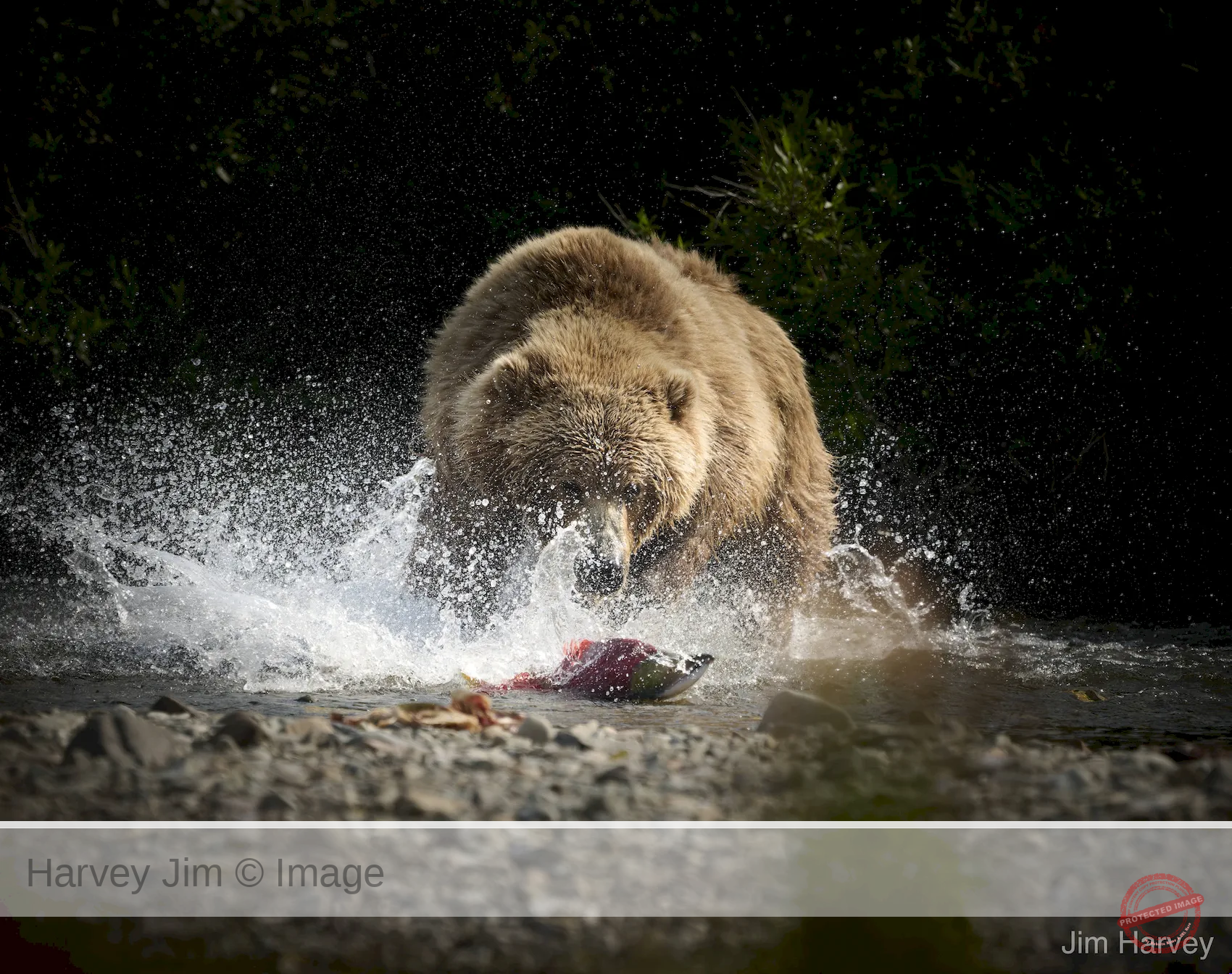
I wasn’t quite sure what to expect when I left for a week of photographing bears in Alaska. All I knew was that reports of these trips varied from “best thing ever” to “life changing” to “transformational.” In fact, I tried to sign up for a 2027 trip in the summer of 2026, but they were all sold out. Then, Steve Mattheis had a cancellation for a slot on his August 2026 trip, so I jumped on it. It was life changing, but in a way that was much different than anything I had imagined.
Steve is a fantastic photographer and instructor in Jackson Hole who also has a great YouTube channel (wildlife photography without the dreaded YouTube flex). I spent several days with him in Jackson trying to photograph moose (meese?) in the snow in December of 2025, but alas, there was no snow! Confident we had shaken off the bad weather/conditions hex on the moose trip, this one had to be good. Steve mentioned there would be a “local guide” on the trip and that was none other than Kate Rice, a renowned wildlife photographer in Alaska. Kate also co-founded the non-profit “For the Love of Bears.” So, we were well stocked with expertise, experience and heart felt guidance.
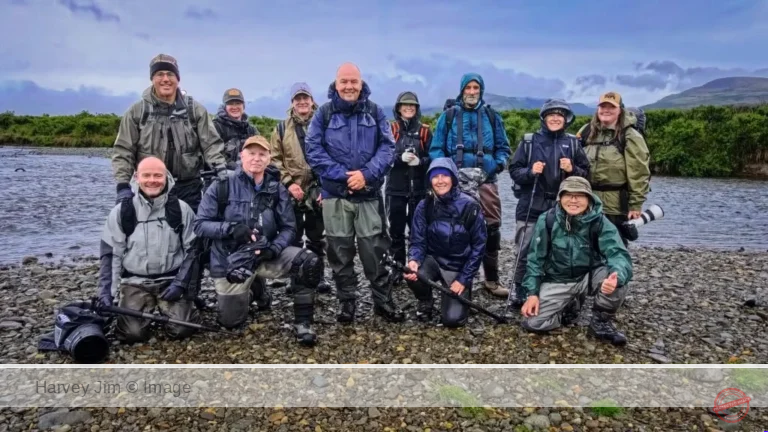
We were headed into Katmai National Park for a week at Bear Haven Lodge during the Salmon run. After arriving in Anchorage, we took a commercial flight to King Salmon, where we caught a private float plane to Bear Haven. This was my first experience with a float plane, but none of my concerns were warranted – it was just like every other small plane I had been in, save for potentially getting one’s feet wet on the way in and out. The pilots were not sky cowboys – they were all excellent, professional and confidence inspiring.
We spent plenty of time in float planes during the week as we were shuttled to and from an appropriate spot for the bears each morning and night. High winds changed our plans on Wednesday, so we went to the famous (perhaps infamously popular) Brooks Falls (view the live cam here). That change in plans worked out well as we passed up Brooks Falls on our last day in favor of returning to the river, where there we found perfect morning light and lots of bears. Float plane take off, loading and long landing videos below by Greg Hazen (on another of his many cameras).
Temps were from about 50 – 70 degrees F (~10 degrees warmer than it should be that time of year), and as it’s Alaska, there could be rain and howling winds at virtually any moment. So, layers and good rain gear are a must. We walked between five and seven miles a day in waders (rentals available), which means hiking in wading boots with all of your gear. I was able to borrow a pair of waders from a friend, but my cheapo pair of wading boots quickly confirmed themselves as such. The gear list included a mosquito net for your head – while we encountered bugs at dusk, there were not enough for me to even break that thing out. That said, I can easily envision a trip where the bugs are miserable, so even though I didn’t use it, I will bring it on the next trip up there.
There was, of course, lots of camera gear. I shoot Nikon for wildlife, so brought a Z8 paired with a Tamron 50-400 and a Z9 paired with the Nikon 400/2.8/TC. The 400 was plenty on the long end, particularly considering the built in 1.4x teleconverter. I was glad to have the 50-400 zoom for those moments when the bears were in easy range. Kate shot with a 300 and a 70-200 (Sony) the entire week, while Steve appeared to be joined at the hip with his Nikon 400/2.8/TC. Dallas Greg shot with a 400/2.8 and a 70-200 with a teleconverter, while Dallas Diane shot with a 100-400. Season to taste of course, but anything much longer than 400 is overkill in my estimation. I was fine without a wide angle and would not add it to the kit for the next visit there. I would, however, consider a Go Pro or some other action camera the next time around. A polarizing filter is a necessity to cut the glare off of the water and a rain cover is critical for lens and camera (unless you’re one of those “they were made for it” types and consider covers only for use by camera wimps). Oh yea – KNEE PADS! I had them and was darn glad I did (although the geek factor is pretty high). The monopod worked well for the 400, but next time, I may only carry one camera and lens during the day and a tripod with a fluid head as I just love shooting off of that platform. I used a 60 Liter pack that accommodates both cameras with lenses attached, but the 400 was slung over my shoulder on the monopod much of the time. A rain cover for your pack is an absolute must but consider a fully waterproof roll top pack or equivalent, as it is easy to envision either falling in a river or standing in an extended downpour, either of which might eclipse protection afforded by a rain cover. Kate’s pack caught my eye (but my wife is under strict orders to shoot me if I buy another photo backpack or jacket).
The bears, however, were the point of the exercise. I think the guests were all worried about being in such close proximity to the bears; the guidance from Kate was to move slowly, follow directions from she or Steve, stay in a relatively tight group and coordinate any departures (for a bathroom break, etc.). Mostly, be calm and respectful of the bears and we should all be fine. Once we were on the river, it was clear that an overwhelming supply of salmon and residence in a national park where the bears have been protected for generations resulted in bears that don’t pay a great deal of attention to a small group of humans who aren’t doing stupid things. I underscore that point about humans doing stupid things, which humans often do. While we all followed instructions, I have no doubt that attempting to get too close to a bear or stumbling across one in close quarters or cutting off their intended path could very easily result in a bad situation. When you see them up close, it is easy to discern that their size, speed, power, agility and huge claws and teeth would not be good for a human. Also, a negative human encounter might result in a bad situation for the bear, which is the last thing anyone wants. As in everything in the outdoors and wildlife photography, we must first acknowledge we are in their reverent space, treat the environment and wildlife with the utmost of respect in every way and avoid stupid human stuff. Move with common sense and gratitude for the privilege. Of course, enough humans and you will inevitably run into the dummy who can’t even do that. We are all lessened by those sorts of encounters.
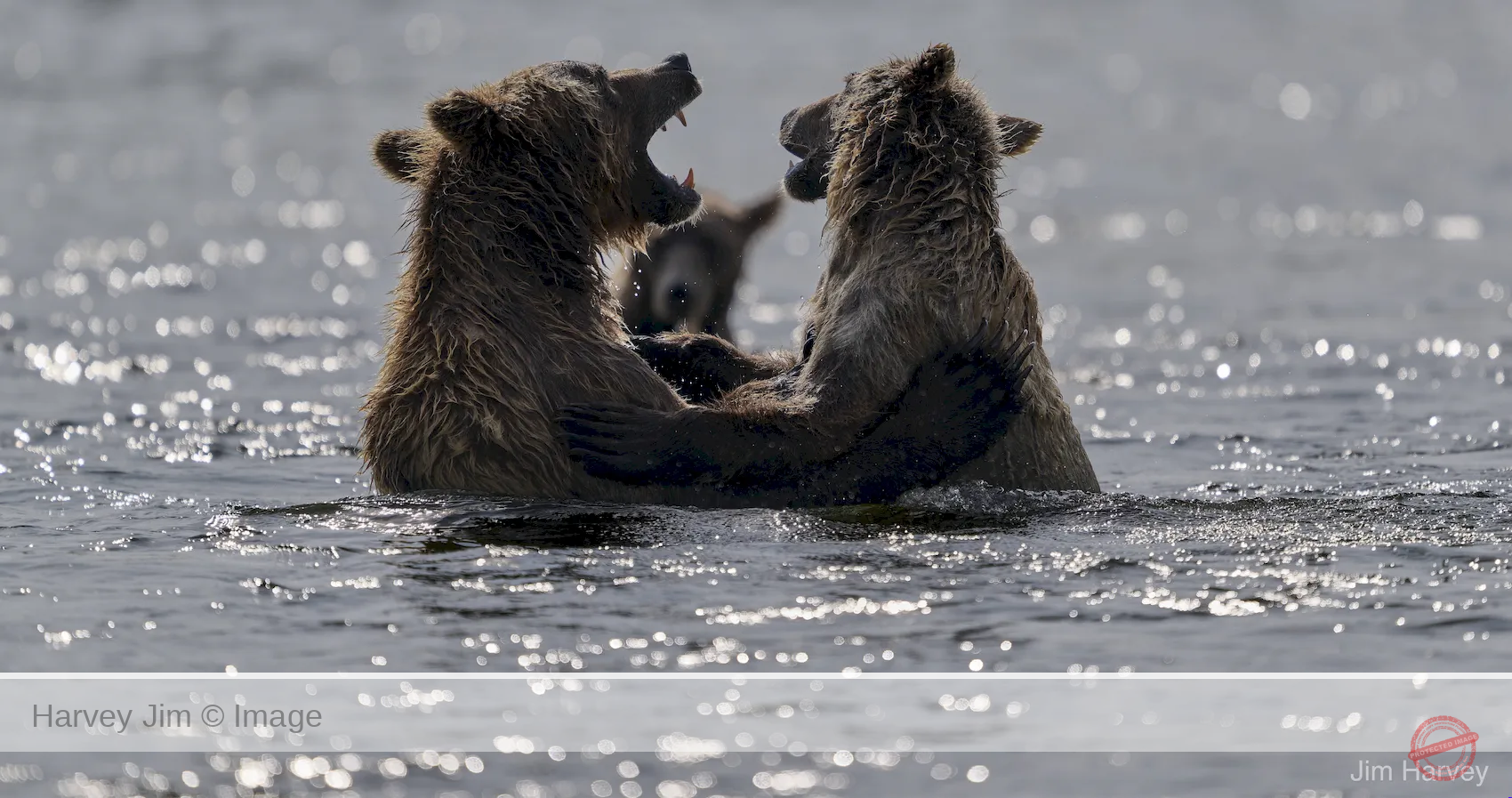
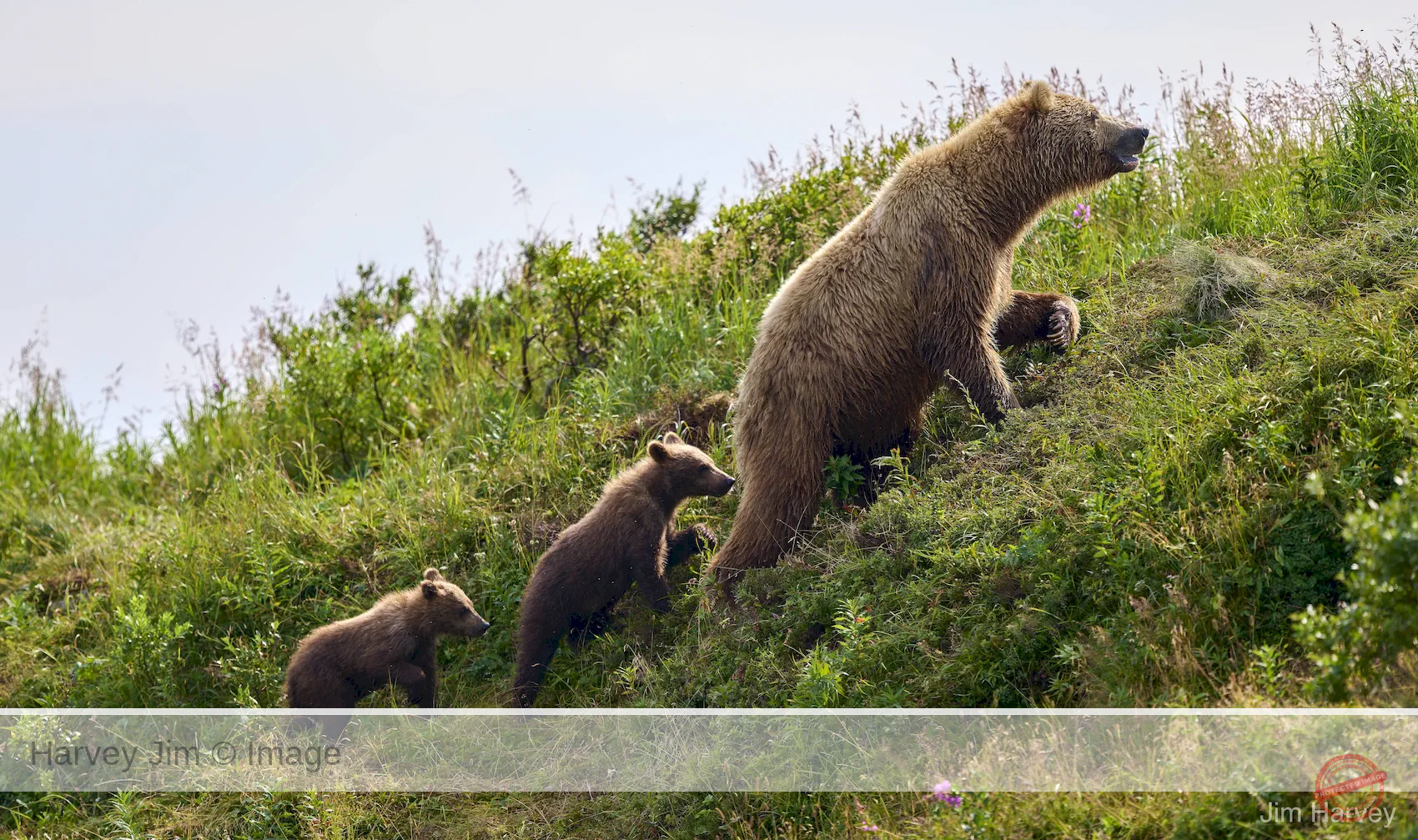
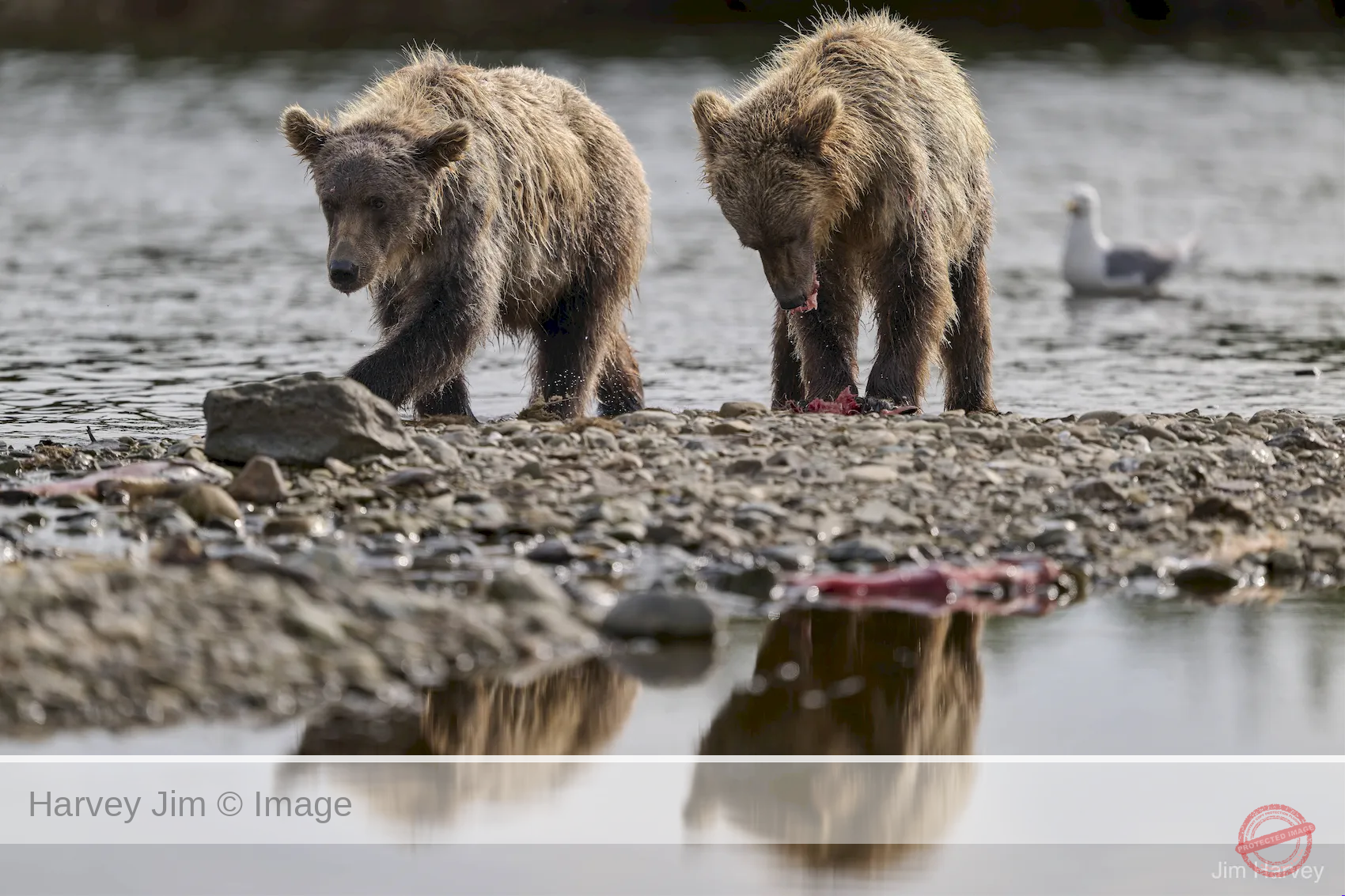
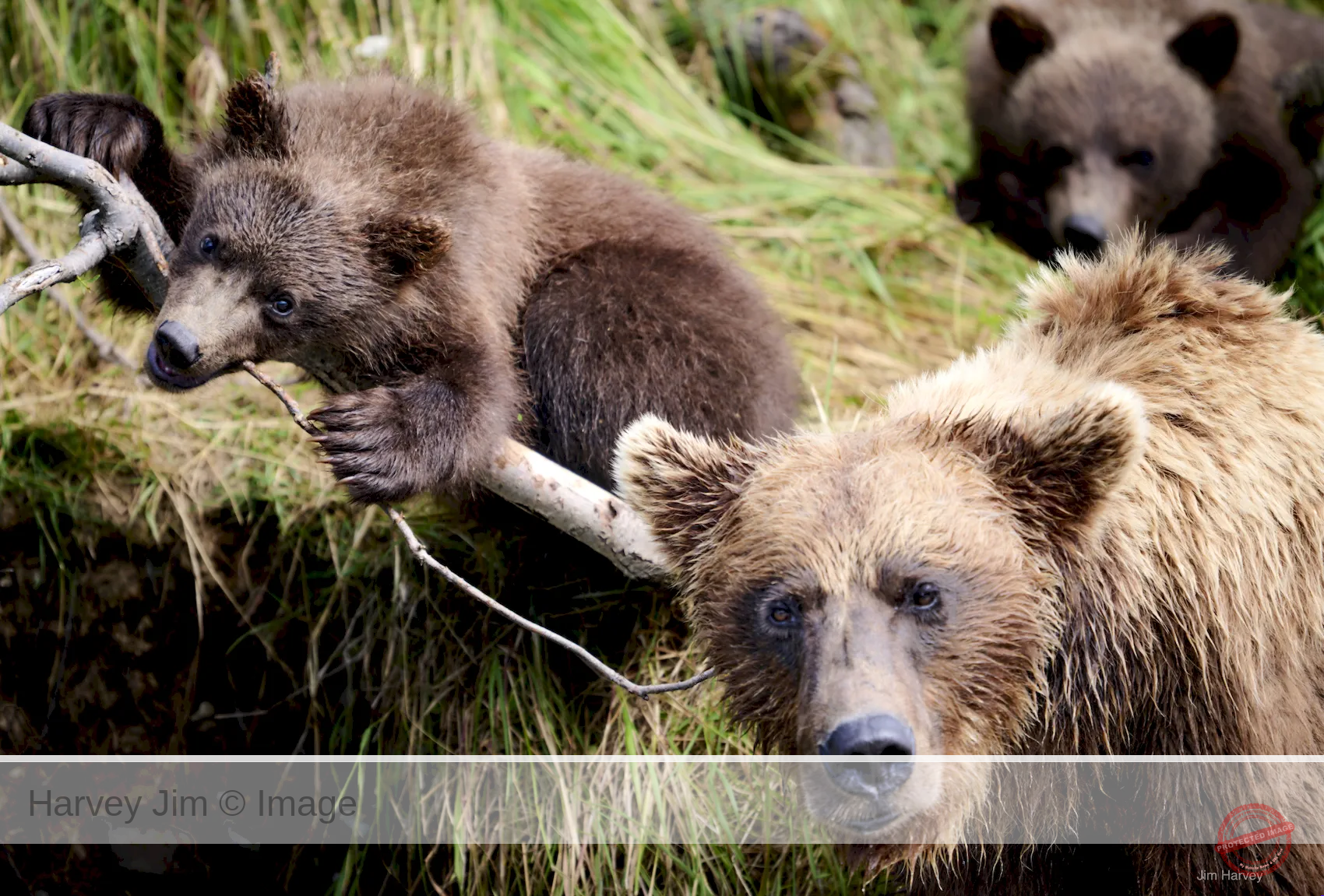
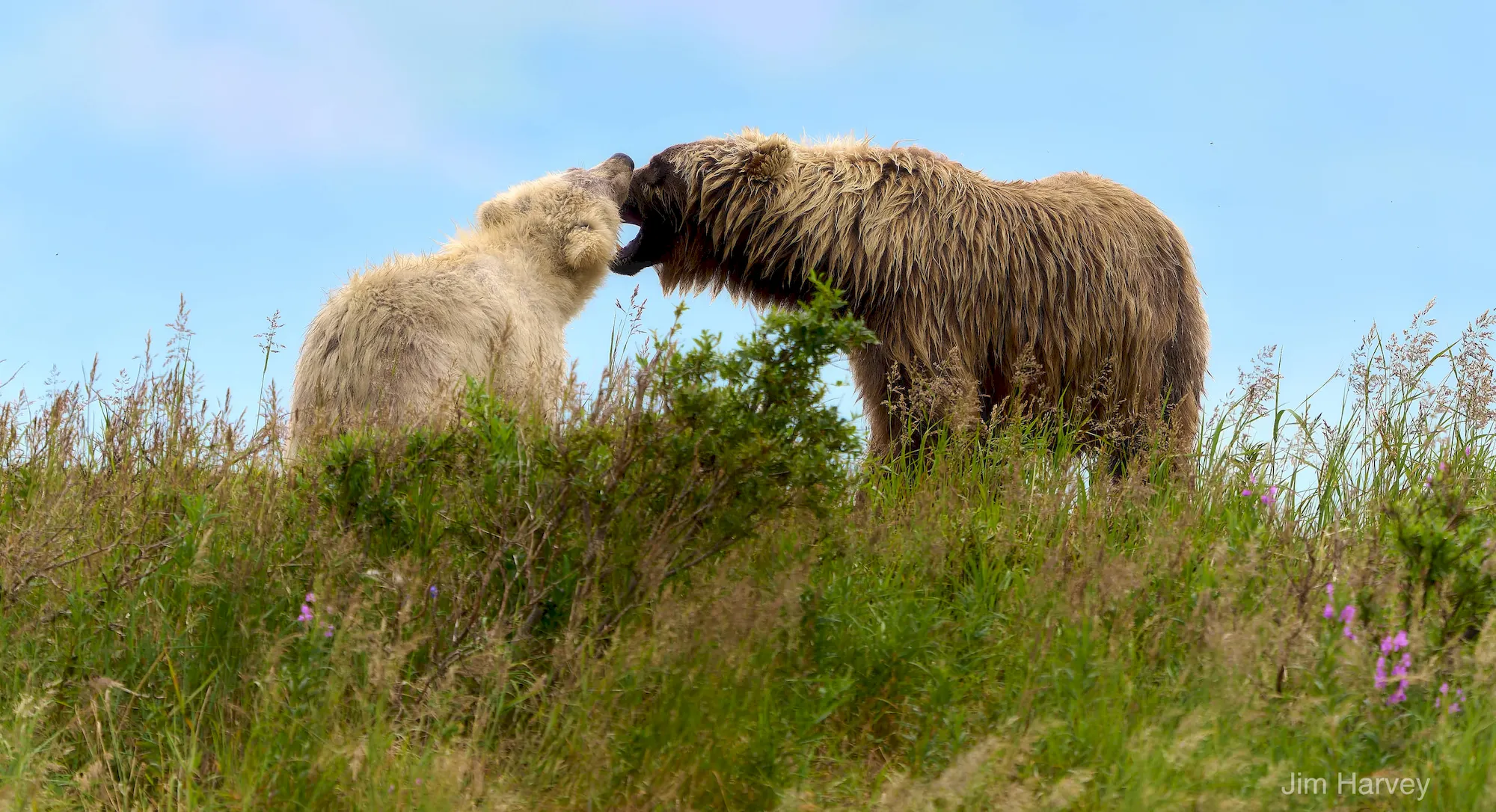
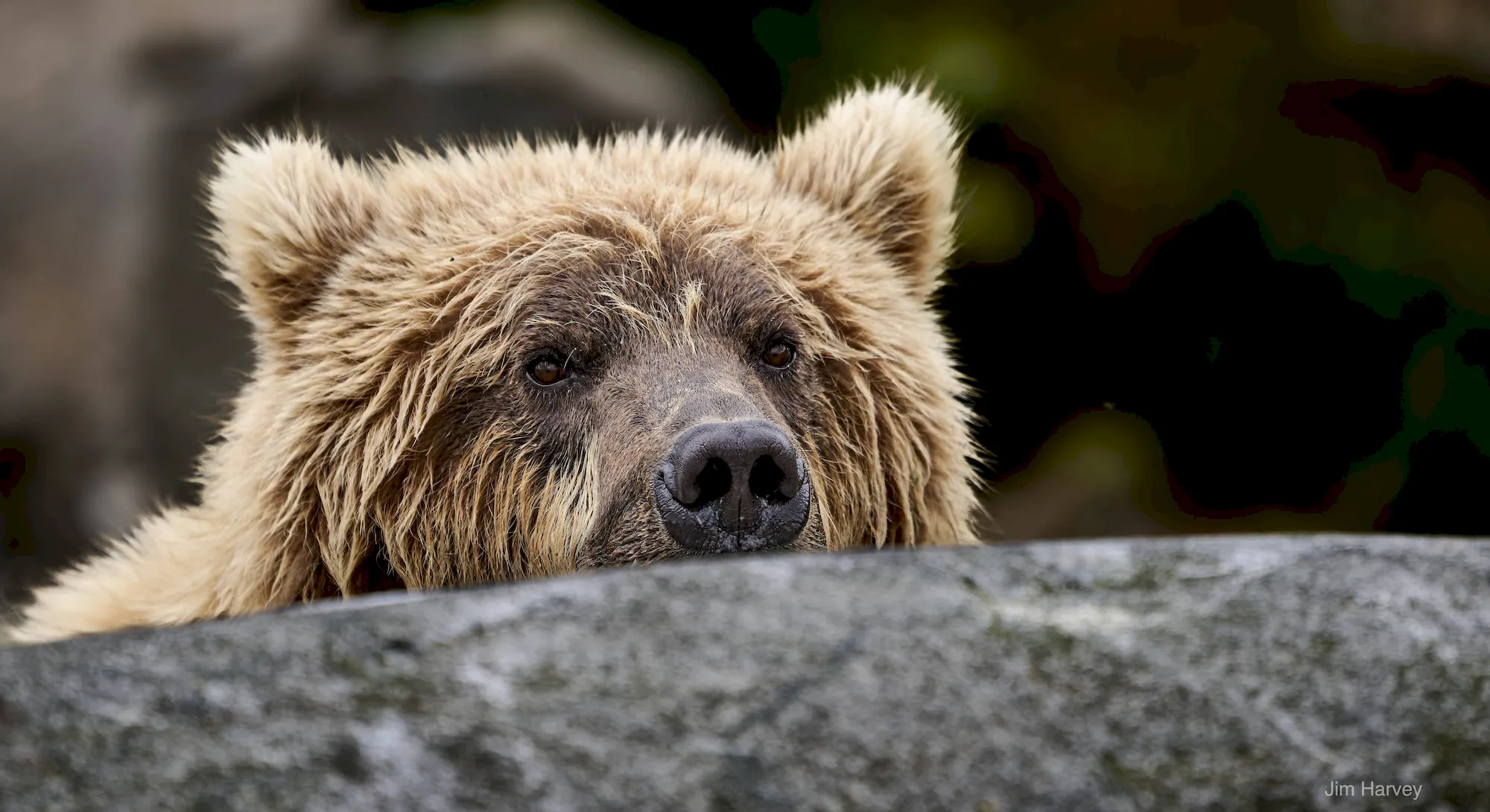
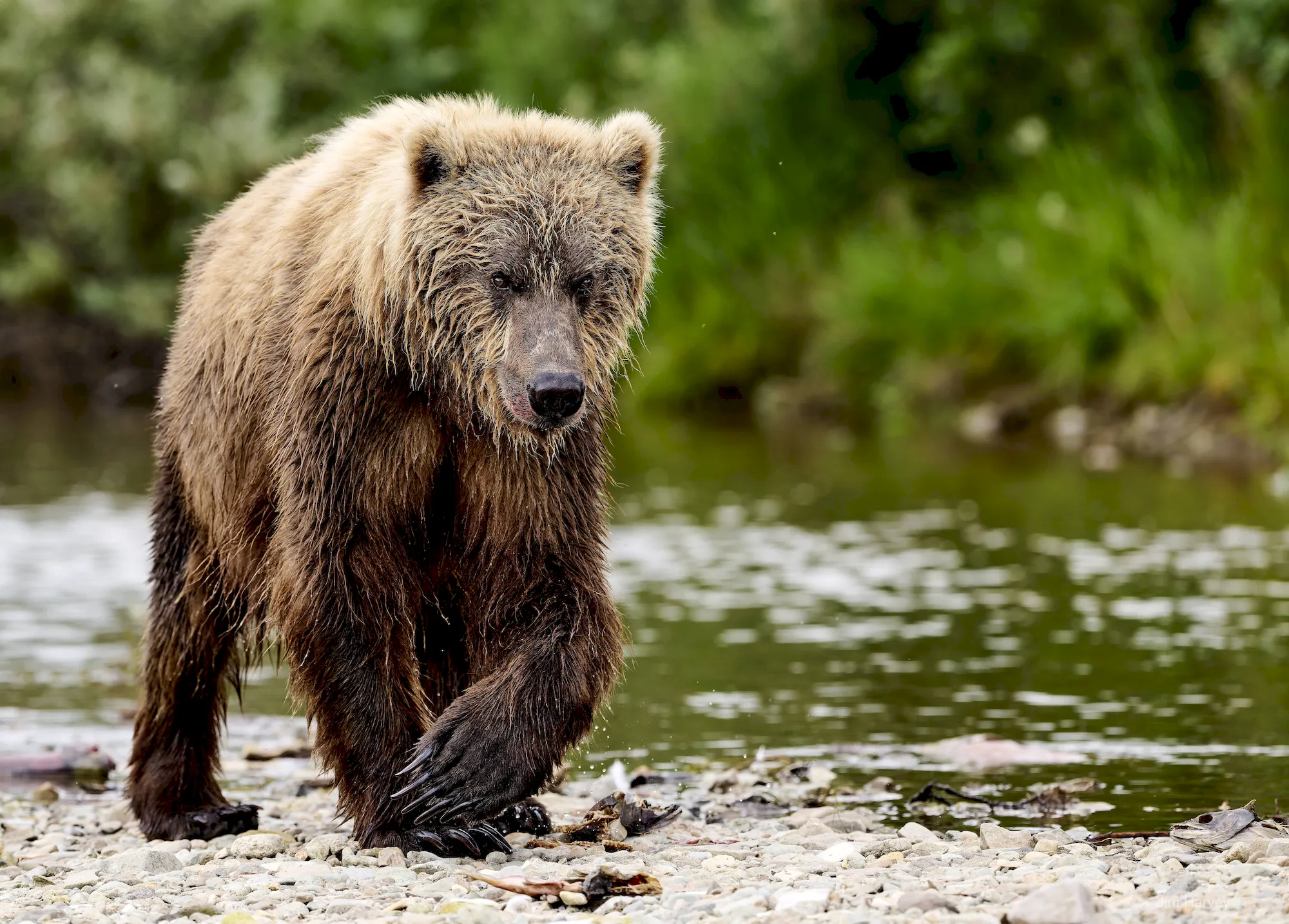
There were bears and lots of them. On any given day, I estimate that we saw at least a couple dozen bears. There were usually multiple bears in sight and Dallas Greg even recalls counting 17 at the same time! There were big ones, mamas with cubs (sometimes COY (cubs of the year), lone males and everything in between. The mamas often took their cubs up away from the river to eat salmon they caught and, unbelievably to me, to nurse. For a remarkable few minutes, we were lucky to see a mom catch a fish, move up the riverbank with two cubs following her and then when the snack was done, you could see her roll over in the grass and hear the cubs (and maybe the mom) ooing and cooing while they nursed. It was simply magnificent – one of the moments you dream about and that can only be appreciated fully if you are there. They were in hip high grass and slightly above us, so you could only see the top half of the silhouette, but there was no mistaking what was going on – it was almost better that the moment could not be captured by a camera, as even the best photograph would never do it justice.
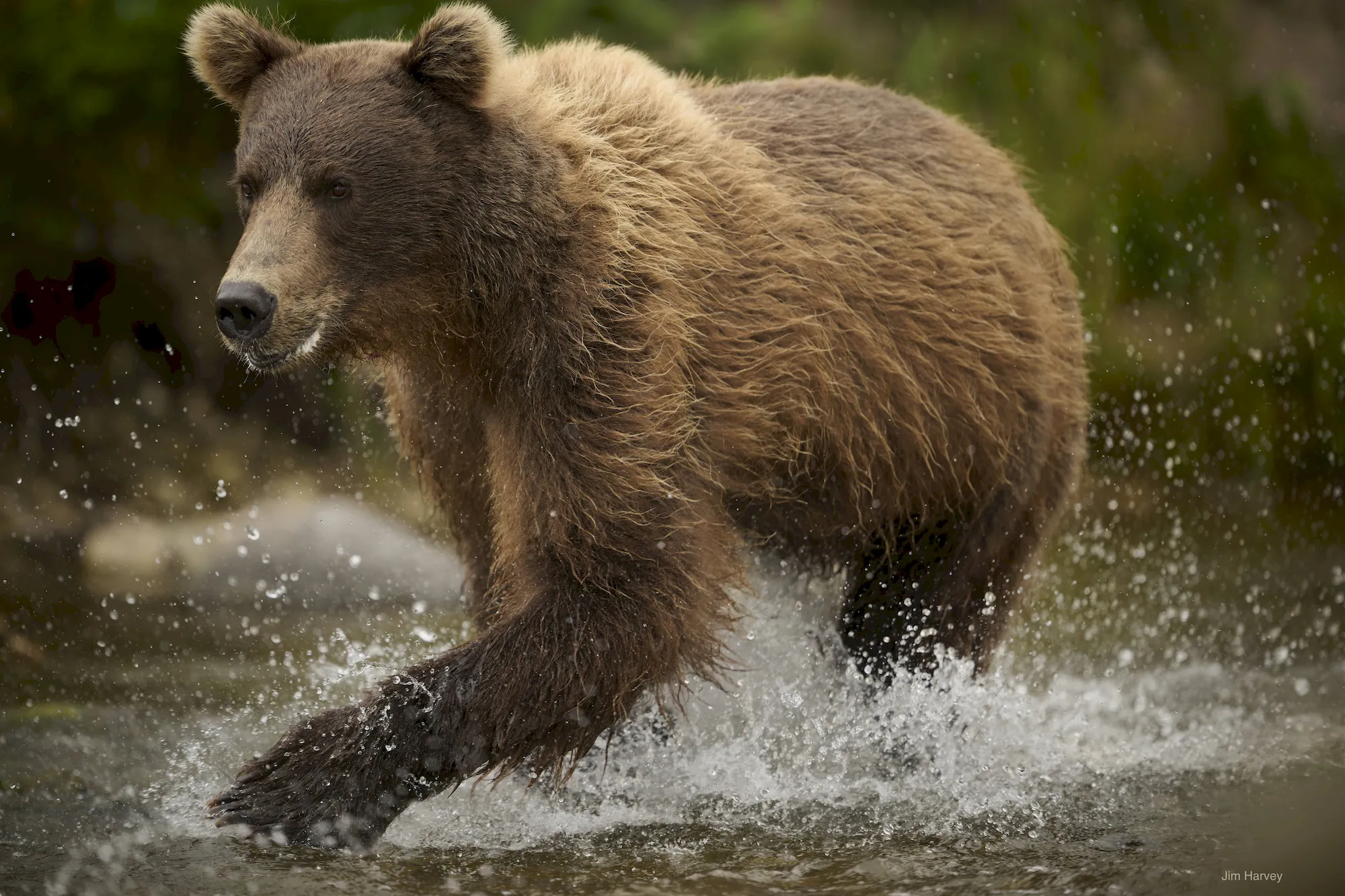
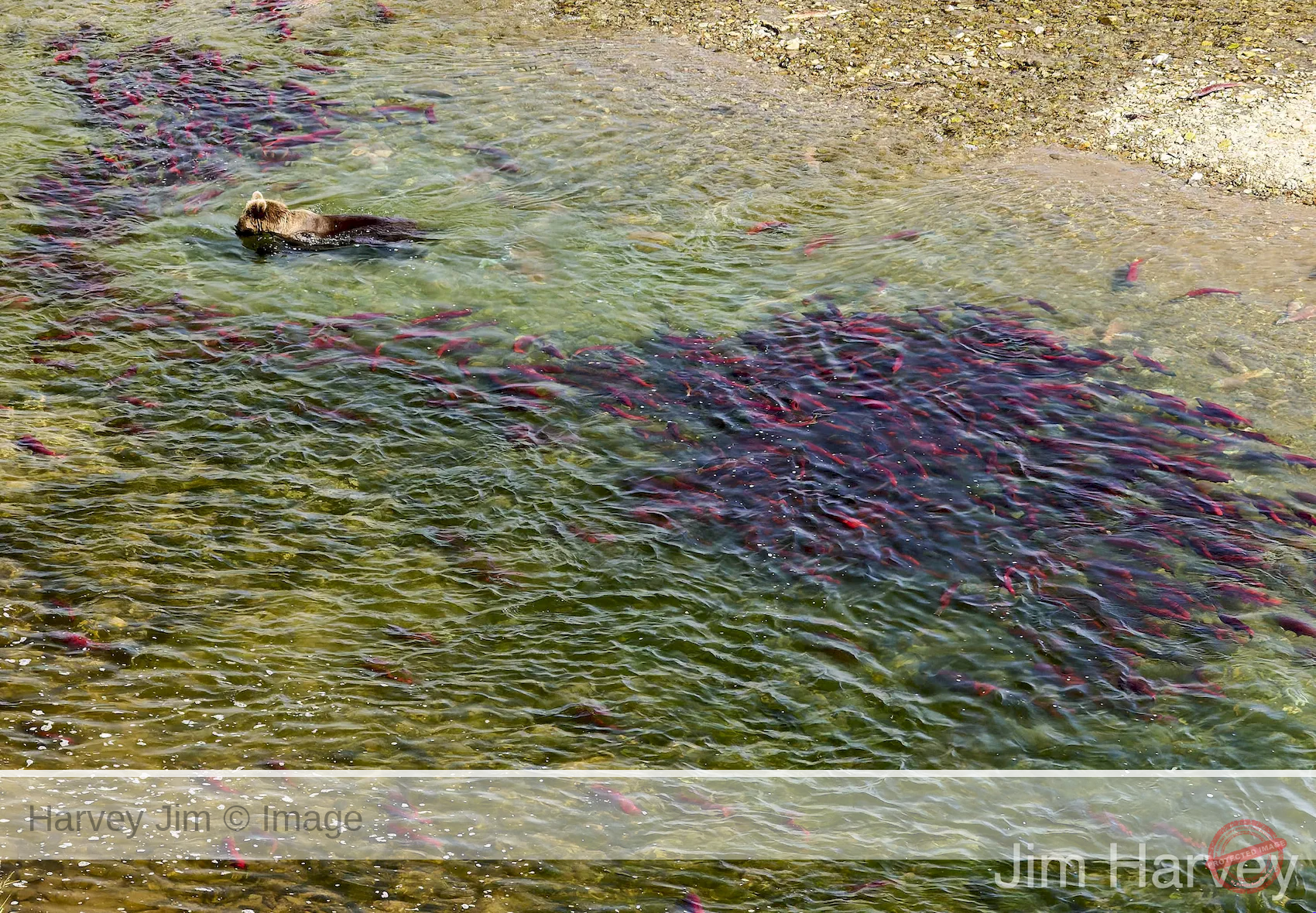
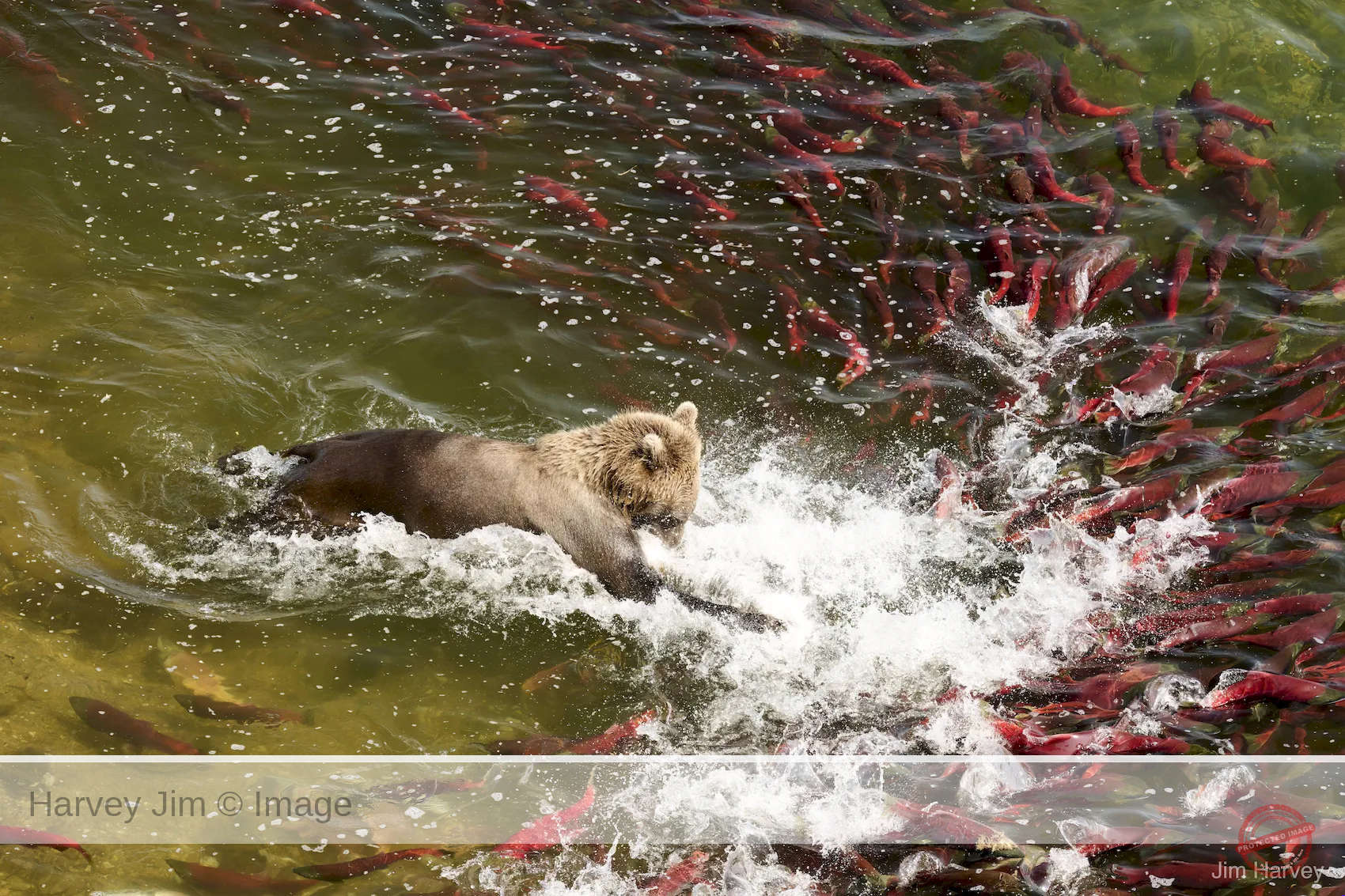
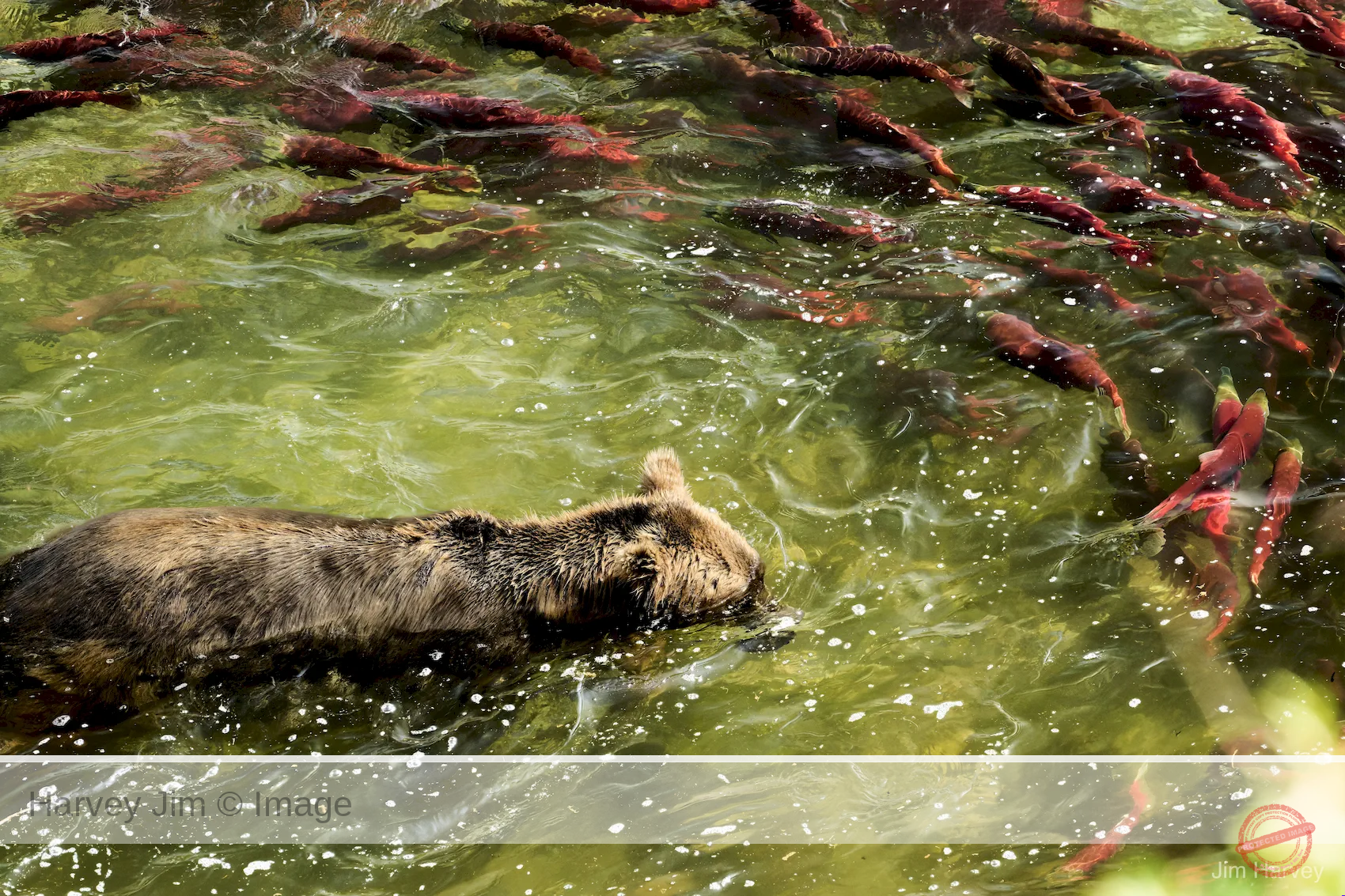
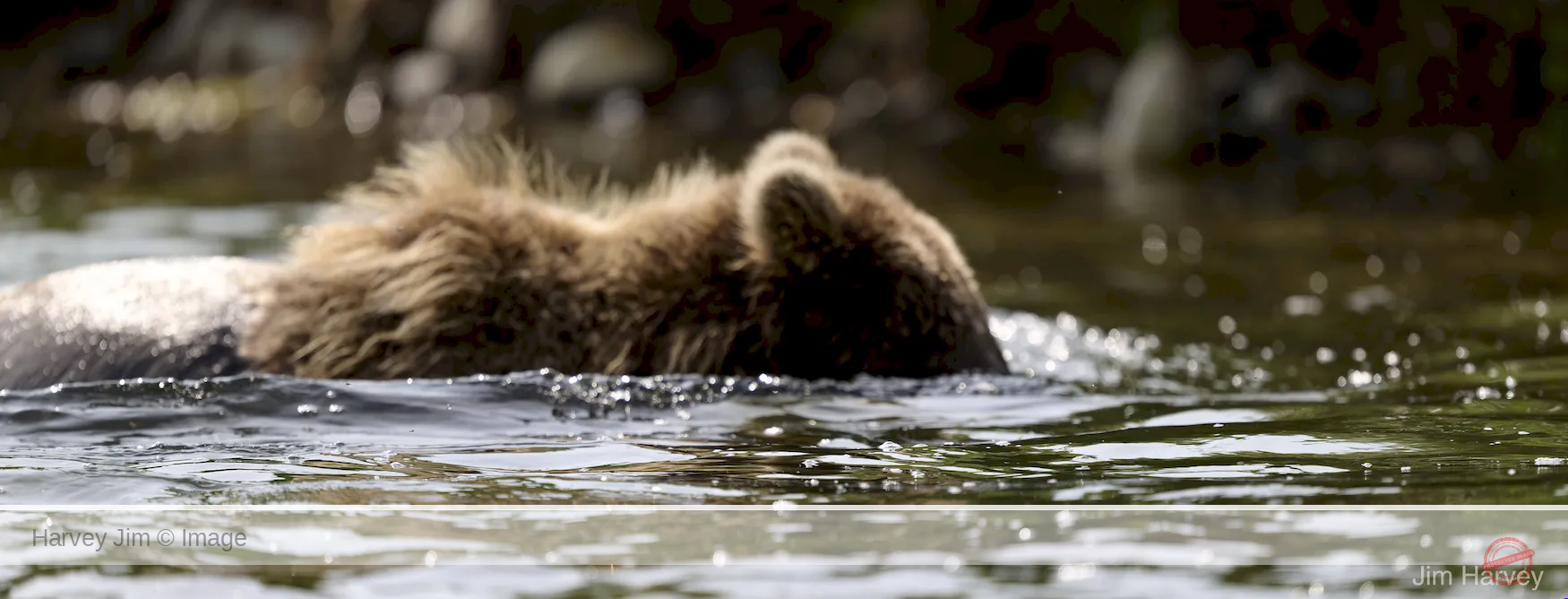
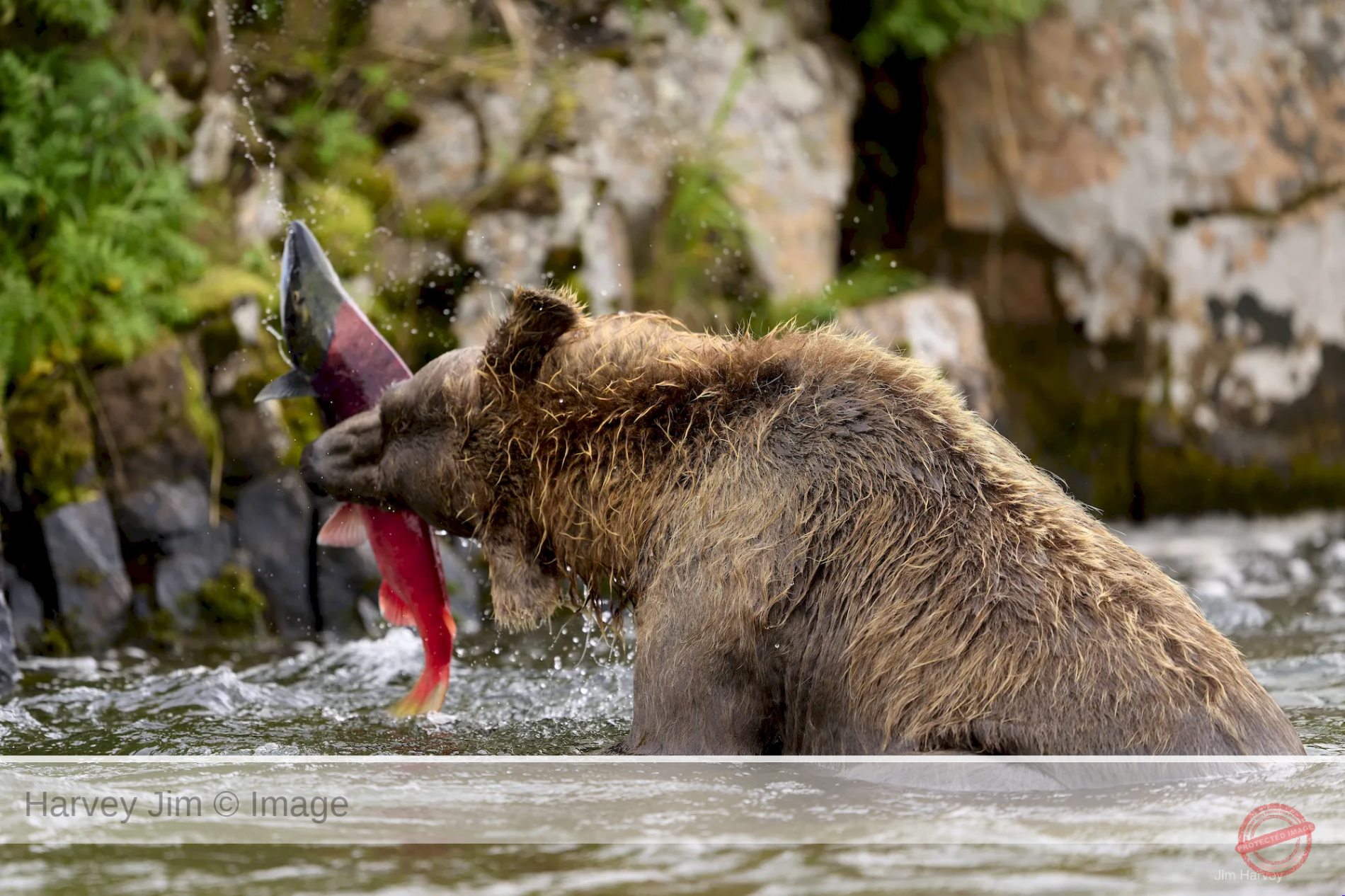
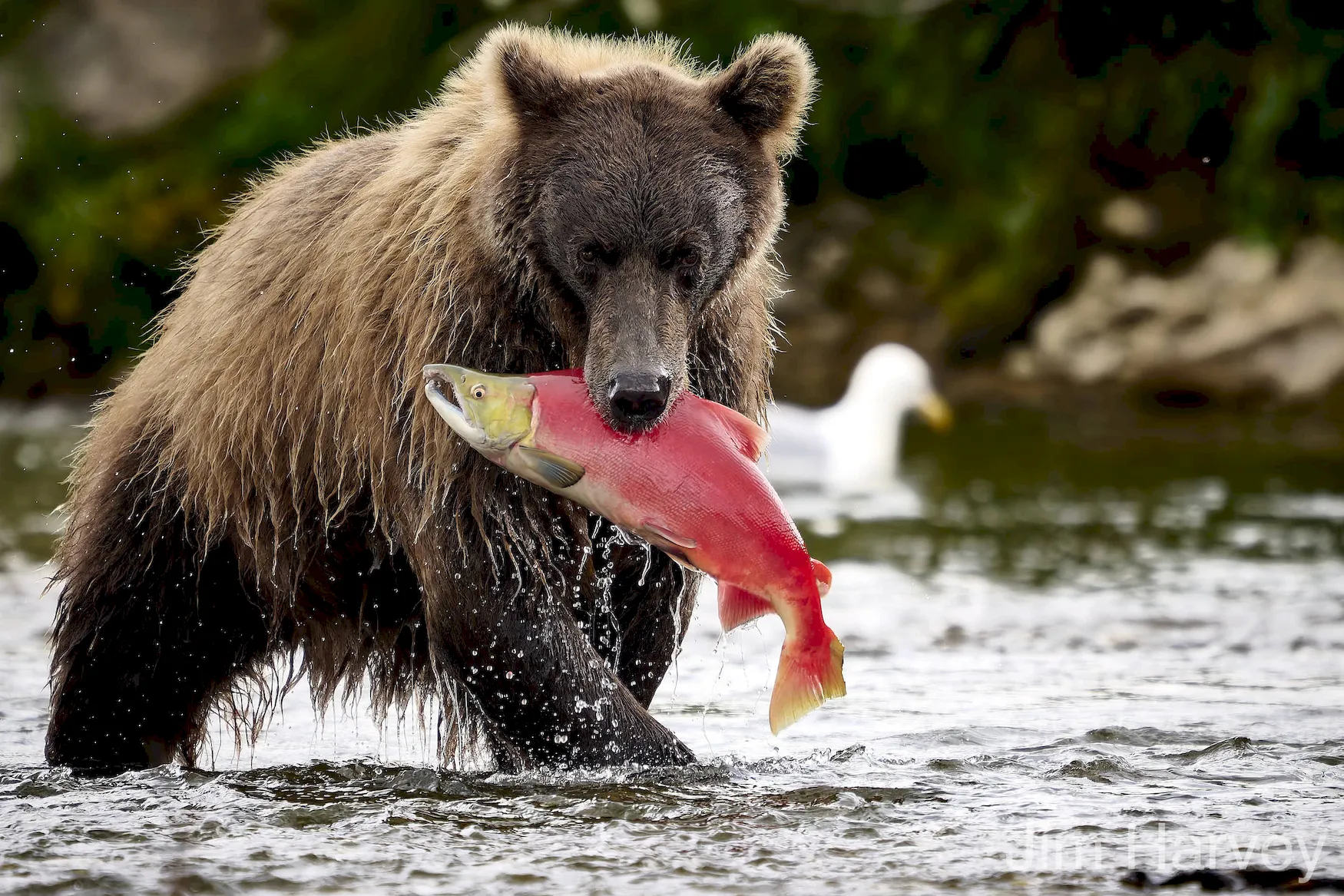
The individual bears all had their own styles of fishing. I also think (in an uninformed way) that the method of hunting was influenced by how many fish there were, the depth of the water, hunger of the bear, whether they were feeding a family, etc., et al. Some bears were seemingly expert hunters and quickly emerged with a fish and others seemed to waste a fair bit of time ambling side to side and passing up droves of salmon in the process. Some would run twenty or thirty yards in pursuit of a particular fish and others would seemingly wait for the fish to swim to them. The peak of cuteness had to be (a) cubs of a certain age fishing in their child like way, and (b) cubs standing on the bank watching mom fish and then making their way to her after the fish was secured so that they could get in on the snack. The bears, however, weren’t confined to streamside; we often saw them on the tundra resting or playing and generally being as handsome and cute (at the same time) as one could ever imagine.
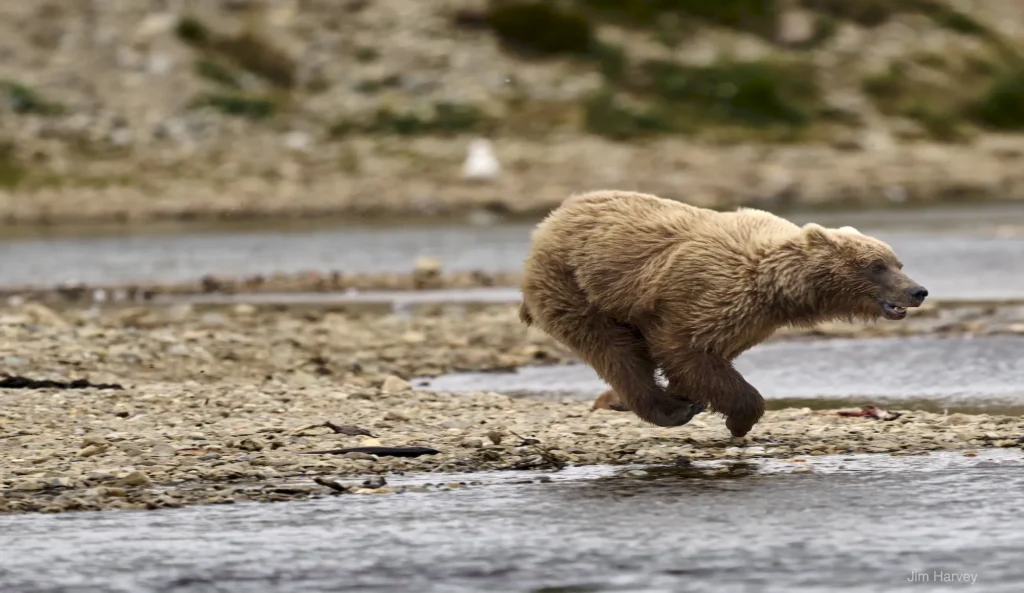
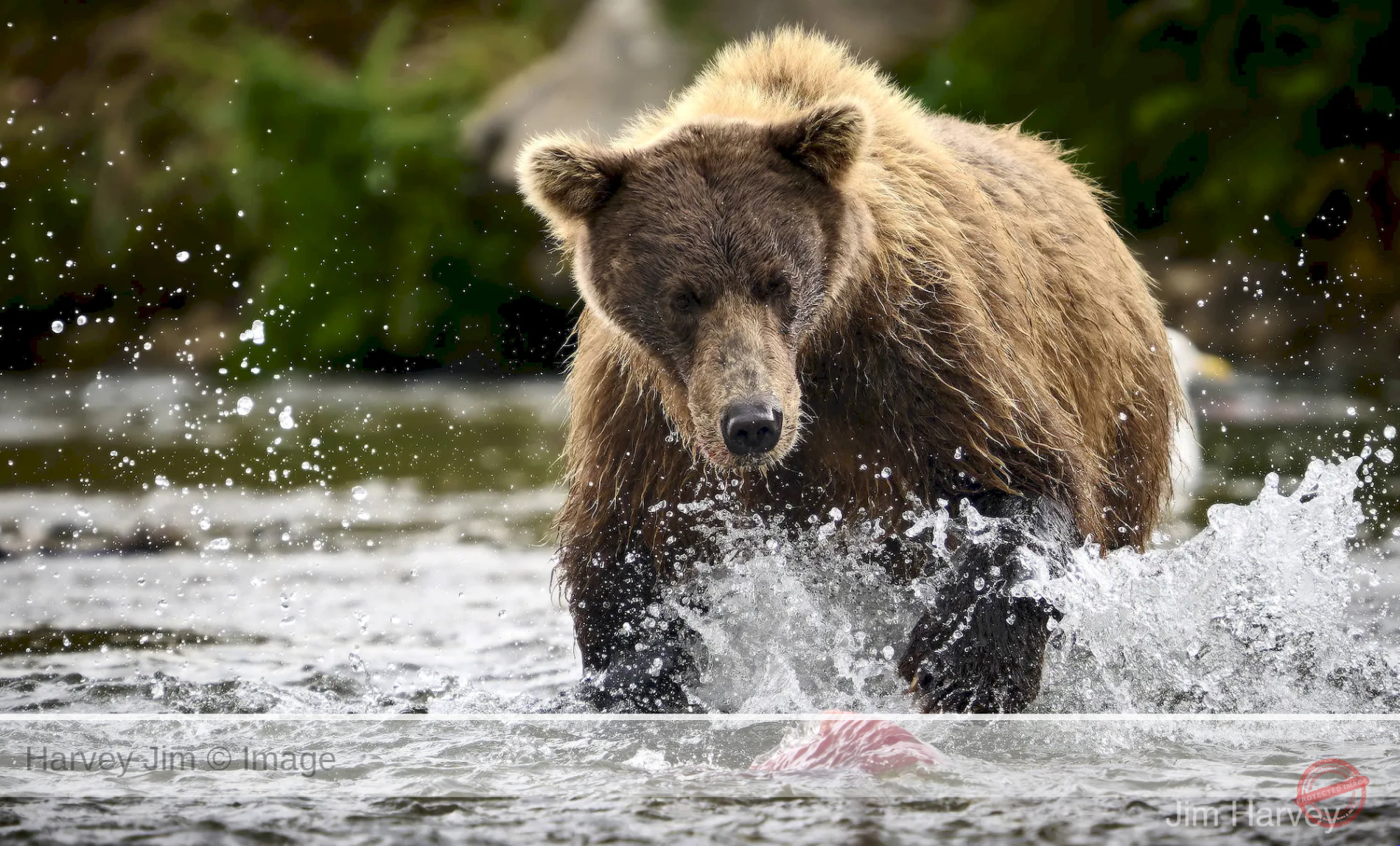
If one could describe a bear with a mission, it would be a mama bear with cubs. As they move, they move with their cubs. Sometimes the cubs wander away a bit, but never too far to have a snack if mom catches a fish. She’s constantly scanning the perimeter for other bears that might threaten her cubs; literally, the only growl(s) with apparent dangerous intent I heard all week came from a mama bear warning off other adults encroaching on her cub territory. The only near fight I saw was when a mama bear bolted over a distance of 40 yards or so by my poor estimate of these things to warn another bear away. They must have had history as the target bear was not, again to my poor estimation, threatening the mom or cubs in any way. I was fiddling with something and didn’t have time to get the camera to my eye, but managed 30 or so photos from the hip in that sprint. There was the one that encapsulates the focus, ferocity and speed with which she sent her message.
If the bears were the main attraction, the salmon were the sina qua non of the enterprise. Without the salmon, the whole scene falls apart. I have known from a distance of the importance of the salmon to indigenous cultures and economies and to the environment in general, but I simply did not (perhaps could not) appreciate the profound impact the salmon has until I spent a week watching bears chase them up and down the rivers. Yes, we saw a couple dozen bears a day and shot an obscene number of bear photos, but we must have seen thousands of salmon each day. You could hear them moving up the river and jumping out of the way when you walked through the water. You could see them finally spent (not having eaten and swimming upstream for days) and, of course, you could see them serve as a lollipop for a big bear. At that point, they had traveled through an unbelievably complicated world and the challenges they face from Mother Nature and from humans and development are too many, too large and too interwoven for me to fathom. But I do have a newfound appreciation for the salmon, their criticality to the culture, the environment, the economy, the bears and their beautiful cycle of life. As is always the case with wildlife photography, the photos and videos we bring back are merely a bauble from a gift shop taken in that larger context.
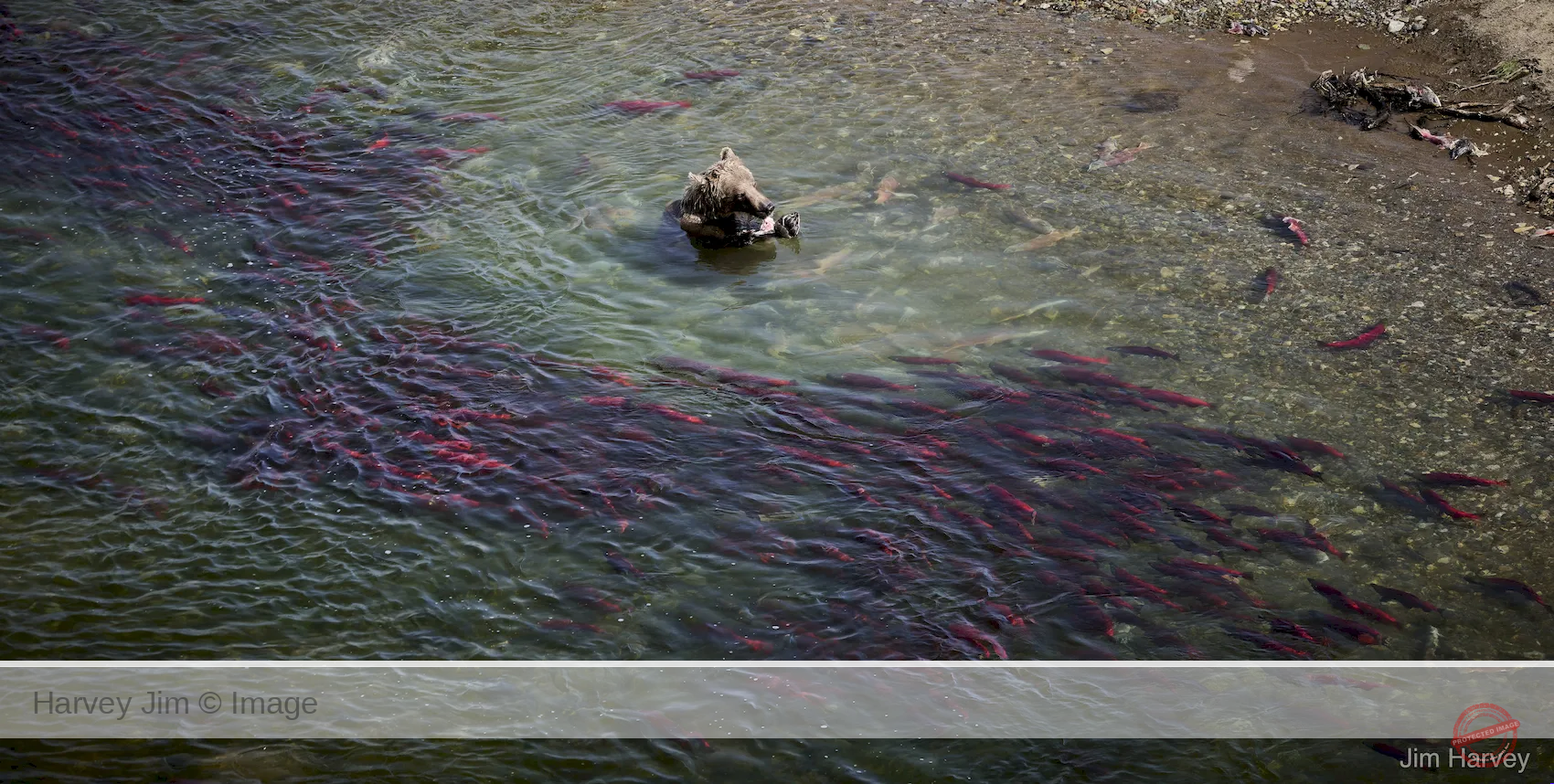
The most profound moment of the trip for me was witnessing sockeye salmon reproduction. The sockeye (oncorhynchus nerka) is an anadromous species, i.e., one that lives in salt water and migrates to fresh water to spawn. They hatch in a river or lake, migrate to the sea after one to two years and then spend two to three years in the sea. The females then swim back upstream over days to weeks, without eating, to within feet or inches of where they were spawned and lay their eggs in a nest referred to as a “redd.” She creates a depression in the bed of the river by gently moving back and forth (noting that she is likely within a day or so of death at this stage) and then lays some of her eggs. Males then fertilize the eggs. She then moves upstream to create another redd and lays more eggs and the male comes in and does his thing. The debris stirred up by creating the upstream redd floats downstream to protect the downstream redd. This process repeats itself three or four times. Alas, the males and females pass after this, having spent their entire being making sure that the next generation has a start. It is subtle, simple, complex, delicate, powerful, sad, final and regenerative, all at the same time. Witnessing this first-hand nearly moved me to tears. Thanks to Greg Hazen for the following video:
Even considering the magnificent bears and their drama, power and beauty, the flights, and the equipment, and the lodge, the scenery, the guides and everything that we did to get there, it is indeed …
all about the salmon.
nb: all photos and videos by Jim Harvey, unless otherwise indicated. All others used with permission.
4 Responses
What a great story and awesome memory of our week together
Awesome story! Great images
Wonderful story and great pictures! That must have been quite an experience. Thanks for sharing.
Thanks for allowing me to share in this, Jim. Wonderful pictures, and very “educational” commentary! I’ve now enjoyed several of your odysseys. Keep them coming, but keep yourself safe in the process. tj