Scott and Watershed
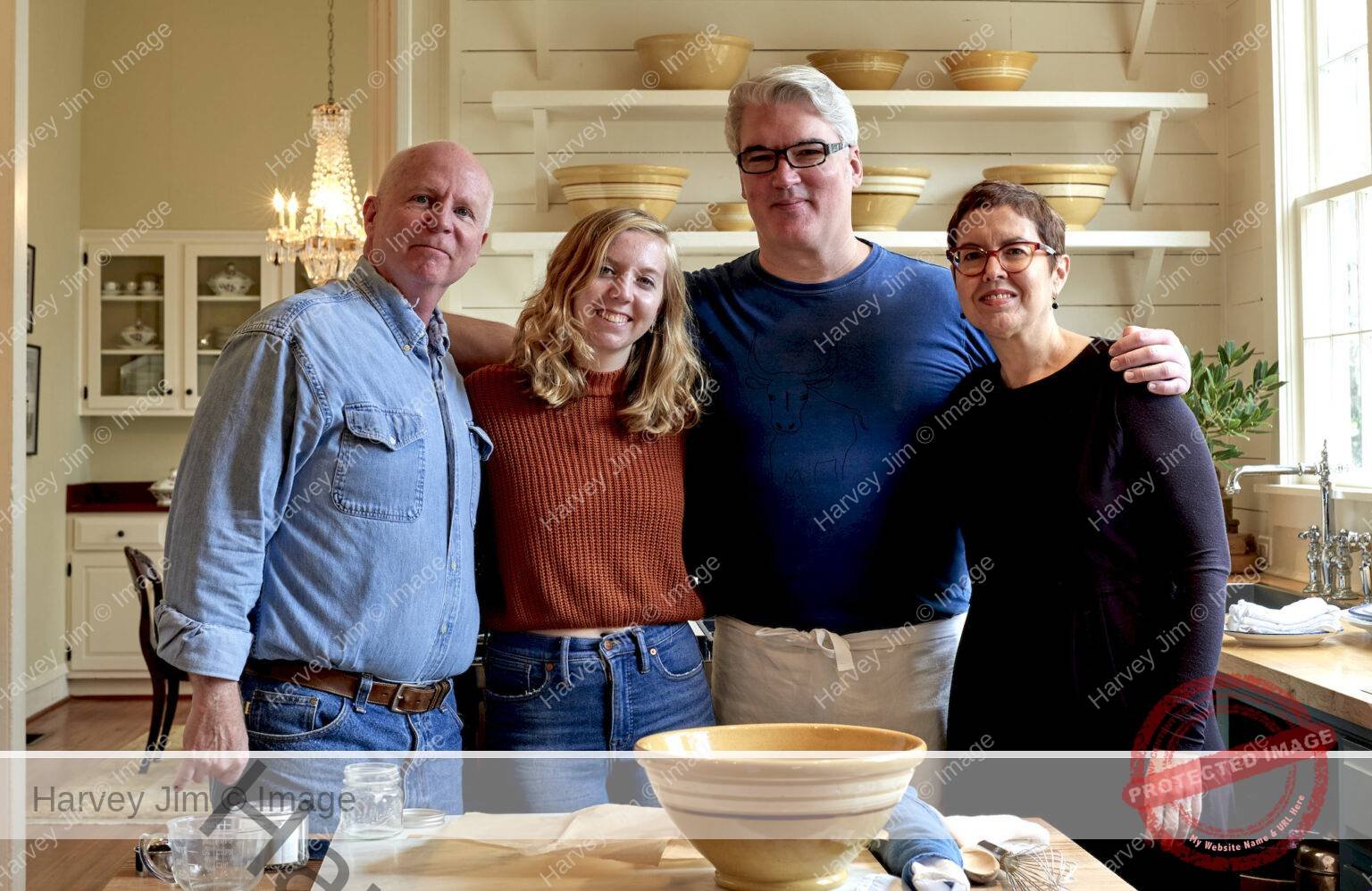
Age does many terrible things to humans. It makes us lose our hair, shrink in size, have all sorts of systemic issues (cardiac and cancer come to mind), get forgetful, likely put on weight, and the hits just keep coming. It also provides a perspective that usually (but not always) isn’t there earlier in life. That perspective allows us to recognize, and perhaps have a better appreciation for a truly wonderful, eye opening experience. I was lucky enough to have had a wonderful biscuit experience spent with my family and Scott Peacock in 2019 (pre COVID-19).
If you don’t know who Scott is, you weren’t in Decatur, Georgia in the late ‘90s and early ‘00s. You also may not be a food geek, as if you were either of those things, you would know who Scott is. For the non-Decaturites, Scott was the chef at Watershed, which was a groundbreaking restaurant in Decatur, famously co-owned by Emily Saliers (half of the Indigo Girls, who also hail from Decatur). Watershed was in a refurbished auto garage, complete with roll up doors in the front, concrete floors and more – right on the main drag in Decatur (there is a successor to Watershed in Atlanta now, but all remarks in this article relate to the genuine article, without comment on the successor).
There was a cool wine store incorporated into the restaurant when they started out, and I have no idea of the economics or the actual reason, but I chose to believe that the success of the restaurant overwhelmed the wine sales, so that space was rededicated to seating for the restaurant. So, outside of our house, Scott is a celebrity in the food world and, inside our house, he was the chef at a restaurant that meant more to us and the rest of Decatur than any other.
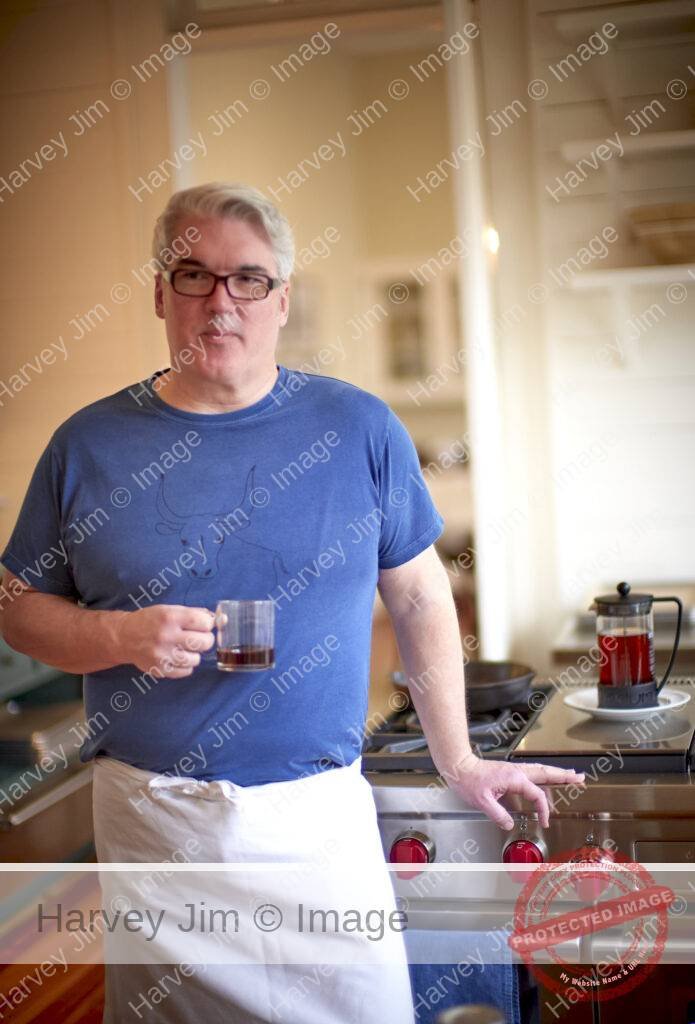
The menu at Watershed was southern food as it should be …. freshly stunning in its simplicity, true to its roots, without serving as a boring homage to days gone by — just wonderful. It was the whole roasted bronzini that I remember most (having had it for delicious take out within the first week after my daughter was born). And, then there was the Very Good Chocolate Cake, which was deep and rich, with a dollop of whipped cream (the real stuff) that was very well worth the calories. It is still, without even a close second, our favorite dessert here at home. The vegetable plate was another favorite which, of course, varied depending on the season, but never disappointed.
In nice weather, with the garage doors raised and the room full, just a few blocks from our house, with great wine and family and friends, it was truly an event. While it was a different sort of event, Friday nights featured Fried Chicken (brined, of course) that has not been challenged in my estimation. Crispy on the outside, tender and flavorful on the inside, and could be eaten with your fingers, with little resort to a napkin – Fried Chicken as it should be.
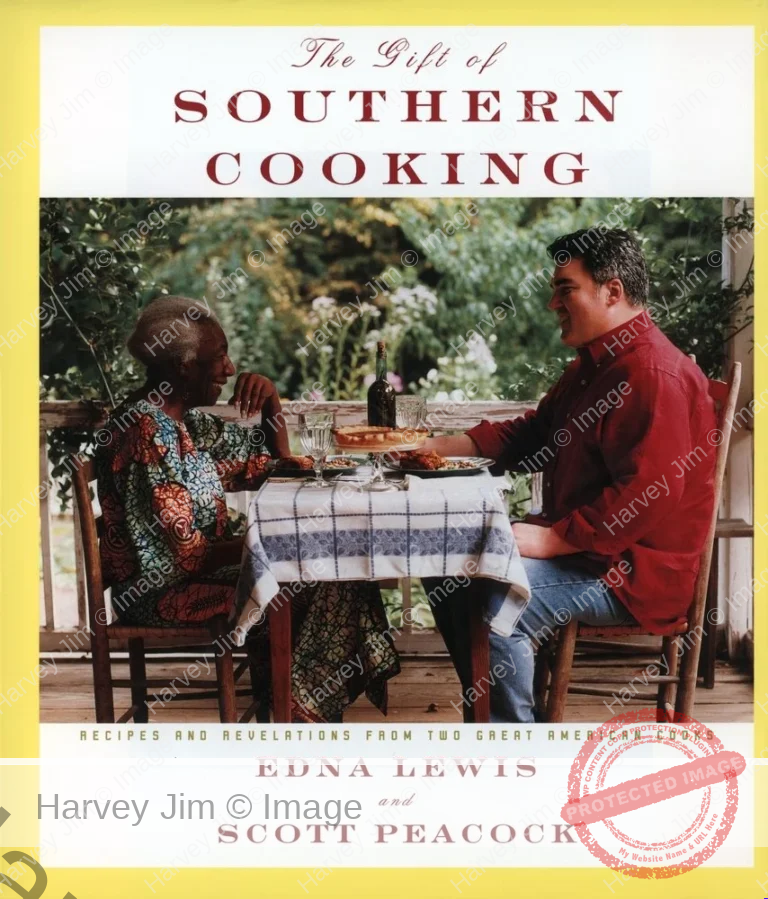
One couldn’t talk about Watershed and Scott though without also talking about Edna Lewis, who was a renowned African American chef who (I like to think) single handedly convinced the world that southern cooking was something other than green beans sitting in grease over a steam pan. Scott recognized a time capsule of taste and experience and humanity in Ms. Lewis and even cared for her in her later years – she died in Decatur in 2006. She and Scott co-authored The Gift of Southern Cooking. Ms. Lewis had previously written The Taste of Southern Cooking and several other cookbooks, was the featured chef at a renowned New York City restaurant and several other beacons of the food community. Who would have thought that a young white chef from southern Alabama would form a powerful duo with an elderly African American doyenne of southern cuisine in a city within the city of Atlanta – but that was Decatur twenty five years ago, that was Watershed, and that was Scott and Ms. Lewis – for which we in and beyond Decatur are ever grateful.
All of this brings us to Black Belt Biscuits. After leaving Watershed, Scott relocated to Marion, Alabama where he “lightly” restored a local home. While in Marion, Scott helped renovate the kitchen of Reverie, a local Antebellum mansion that was not burned by General Sherman. Marion is deep in Alabama, southwest of Montgomery and about 3.5 hours from Atlanta by car. The “black belt” of Alabama is so named because the soil is literally so dark – it reminded me of cooling tar. It is rich and fertile, perfect for raising cotton and likely anything else, but it was also, not surprisingly, central to much of the civil rights movement. In fact, we overnighted in the funkily restored Jewish men’s club in Selma, Alabama and crossed the (in)famous Edmund Pettis bridge. It is impossible to escape history when there – it looms like the dark soil on a misty morning. If one pauses, the quiet and density of the whole place is palpable.
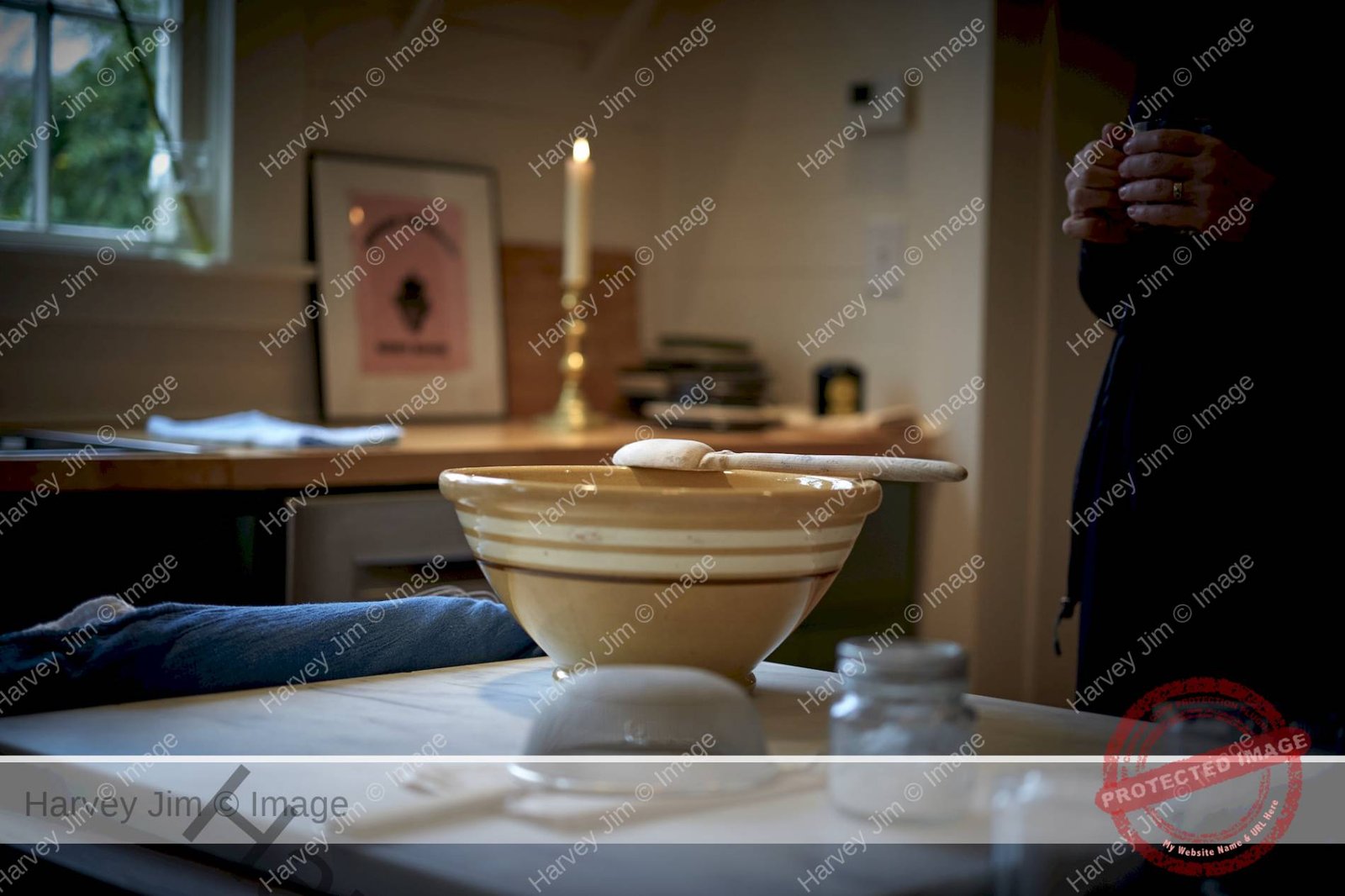
It is my personal view, however, that history is one of the reasons that Scott returned to the area; that is pure supposition on my part. All of that said, it is a lovely area and I see why Scott has chosen it as ground zero for the gateway experience, both to the black belt and to his biscuits. Once we arrived at Reverie, we were met by Scott and I have to say that I was a bit taken aback. I held him in such high esteem for having built a nationally renowned restaurant a few blocks from my house, without kitsch or trickery or condescension (all things that normally accompany attempts at southern food) – it was all just very exciting. Reverie is lovely and should be seen for its own sake (particularly if you’ve never seen an un-shermanized antebellum home). Then, there’s the kitchen which, while true to the overall décor of the home, left no impression that one was not in the workshop of a professional. It also had warm, personal touches though, including lots of perfectly dyed indigo cloths that Scott himself had created. Add that to the tasteful display of persimmons, and wheat, and ham, and tea and a mixing bowl that was more than 100 years old (yes, I felt even more intimidated when I found that out that we would actually use that bowl when we made biscuits).
Since we were from Decatur, we caught up with Scott on all things Decatur, Atlanta, southern cooking, our shared view of competitive cooking shows (booooooo!), and our history with biscuits. We had previously made biscuits from time to time and we certainly appreciated good biscuits, but we were by no means experts. My daughter floated back and forth between Scott’s recipe and one in a Martha Stewart cookbook. I was by far the least experienced biscuit maker and therefore the least helpful and most intimidated to be standing there with a world class chef and true biscuit master.
The whole experience made me reflect on the central role of biscuits and other humble breads of the home that is a constant throughout the world. When you pause over that, you think of corn bread (which is its own whole different thing), naan, scones, tortillas, bagels, pretzels, English “biscuits” (which are really cookies to me) and on and on and on. All of these are simple, frequently present, often overlooked, best eaten fresh, usually eaten with something else, and just not given the credit they deserve – either on our tables or in our lives. My first experience with homemade biscuits was with my aunt getting up to make them before she went to work and we’d have them with biscuits and gravy – not my style now, but unforgettable for a young boy at his aunt’s house in the Arkansas countryside. My mother should enter the conversation here, but she was not a cook and our biscuits consisted of the pillsbury kind. Whack that laminated cardboard thing on the cabinet and it broke open and quickly you had a good smell in the kitchen, but there just wasn’t much personality there. That’s why I remembered my aunt’s as the prevailing example of my youth – the first time I tasted one, I realized that all biscuits weren’t the same and that these (along with the wonderful gravy) were heavier than those that came from the factory, but nicer somehow – more authentic.
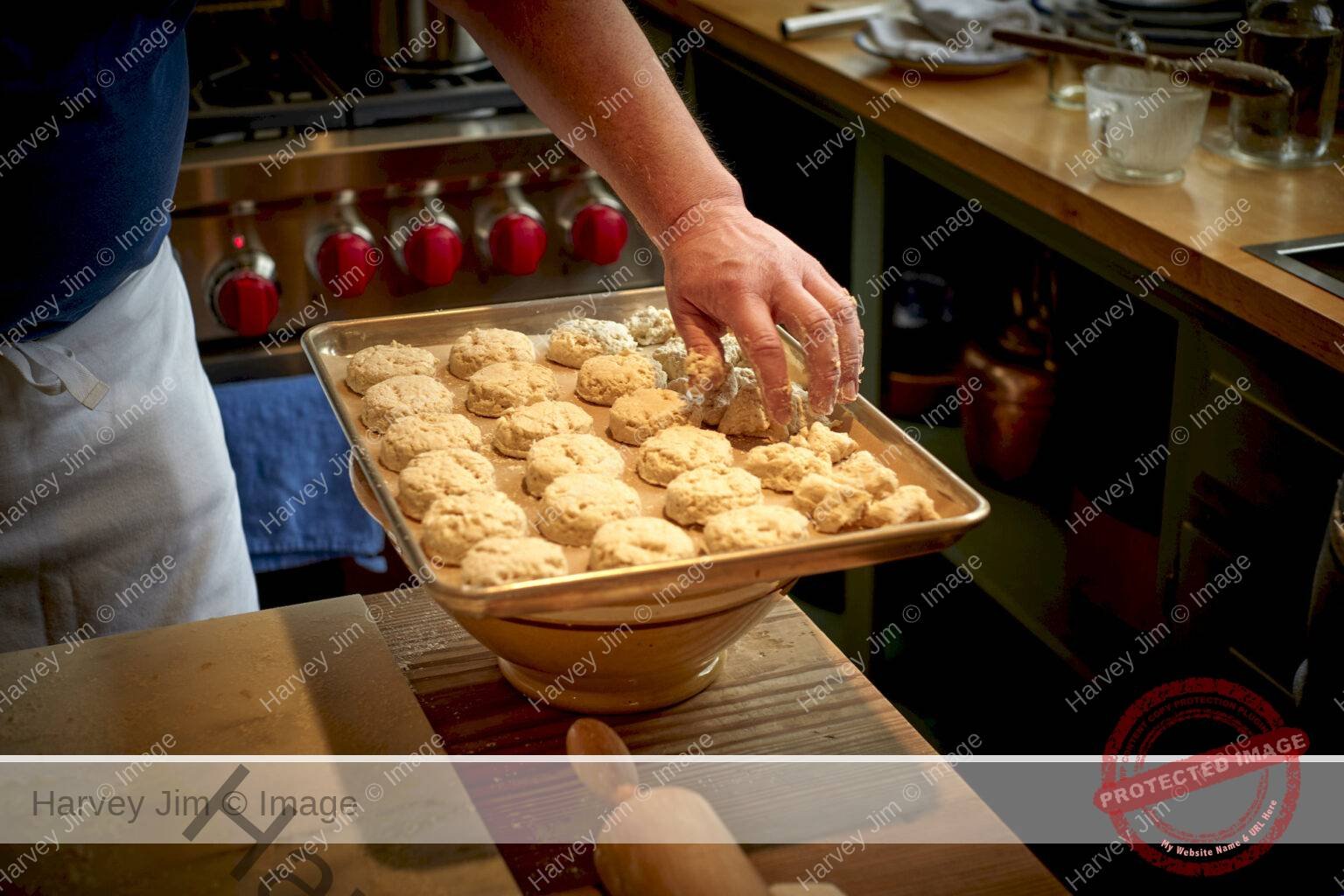
Indeed, Scott is not much of a fan of the pillsbury styled biscuits – which when you think about it – might be closer to one of the brown and serve yeast rolls (which I still love) than they are to my view of what a biscuit should be. They are just too perfect. In my youth, they all emerged from that whacked round cylinder, so they were all the same size and shape and they all taste … the same. For me, the joy of each biscuit is its subtle difference from your personal biscuit baseline (if in Atlanta, compare the cat head biscuits from Pastries A Go Go in Decatur with the much sweeter ones from The Flying Biscuit).
After hearing lots of our respective stories, we moved to making the biscuits. Thankfully, Scott made a batch without our assistance and we just watched. I expected lard to enter the equation, but when Scott explained the finer points of lard, I understood why it didn’t (and was replaced with a nice butter). There was, of course, buttermilk and flour. This wasn’t just any flour though – it came from Anson Mills and I think was milled especially for Scott. It was actually a mix of two flours, but it was perfect. Scott mentioned that King Arthur flour worked just fine, but this was really the good stuff. Yes, after the butter, baking powder and salt and flour were all combined in the stunningly beautiful mixing bowl, we plopped the magic damp blob on the biscuit block (granite or marble or something, but just wow) and watched Scott’s styles of folding, then shaping, then rolling, then poking (with a fork) and then cutting the biscuits. Yes, even the completely raw dough was wonderful.
We hovered around the wonderful range (that takes up literally most of the kitchen, and the same model of which resides in our home in Decatur) and smelled the biscuits making their magic. One of the things that I love best about biscuits is that, for all of their glory, they are incredibly simple and quick to make. This oven was set to 501 Fahrenheit and I would say the entire cook time was about 12 minutes, give or take. Biscuits are also entirely analog and can be messed up in virtually every small way possible and you still end up with a …. biscuit. It may not be the perfect, flavorful, crusty, but soft and dense, but not heavy, Scott Peacock biscuit, but it will be a biscuit. After Scott’s perfect batch, we made our own batch under his tutelage. Both batches were tried piping hot, with wonderful ham, butter and raspberry jam (and lots of it).
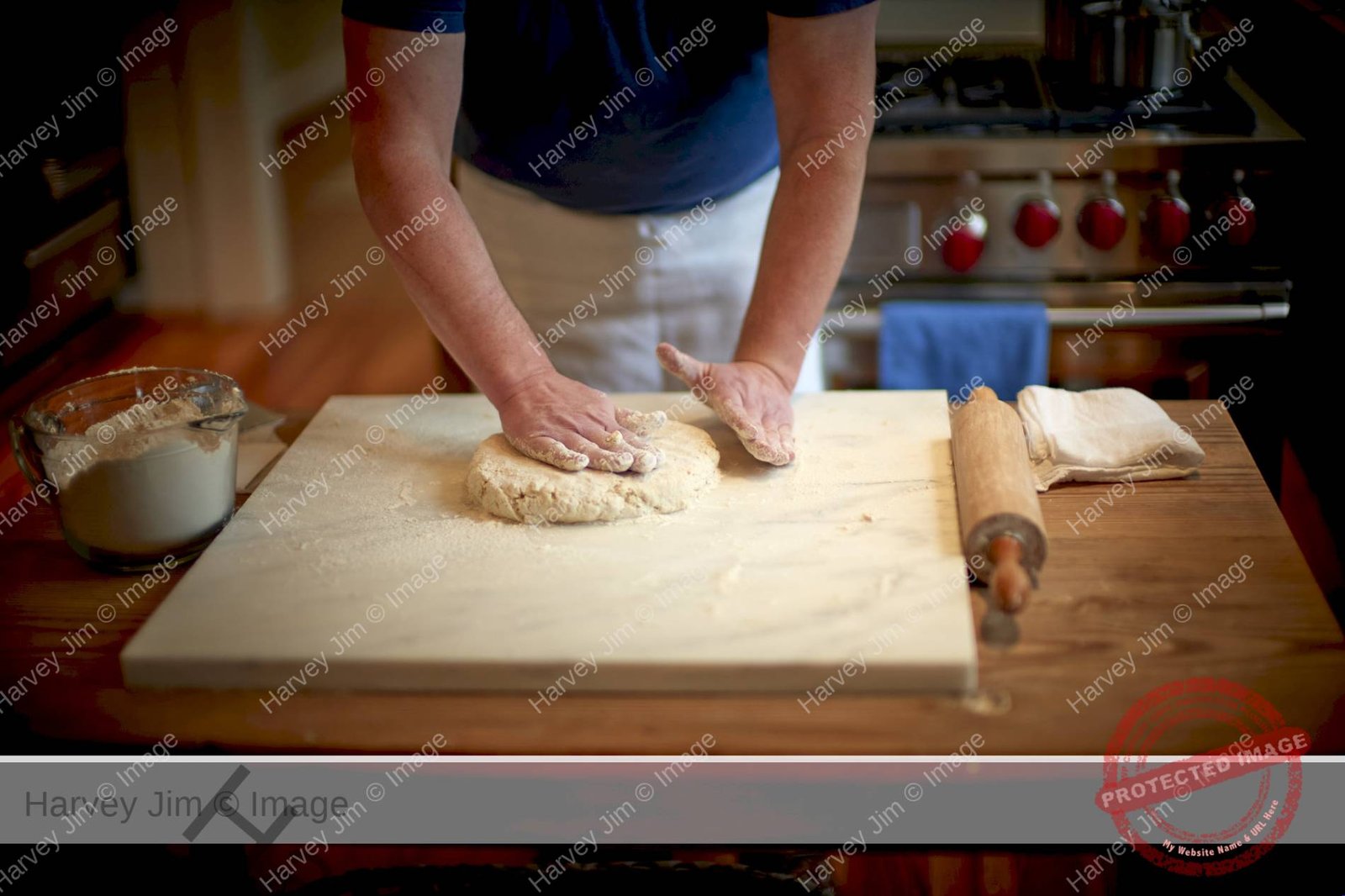
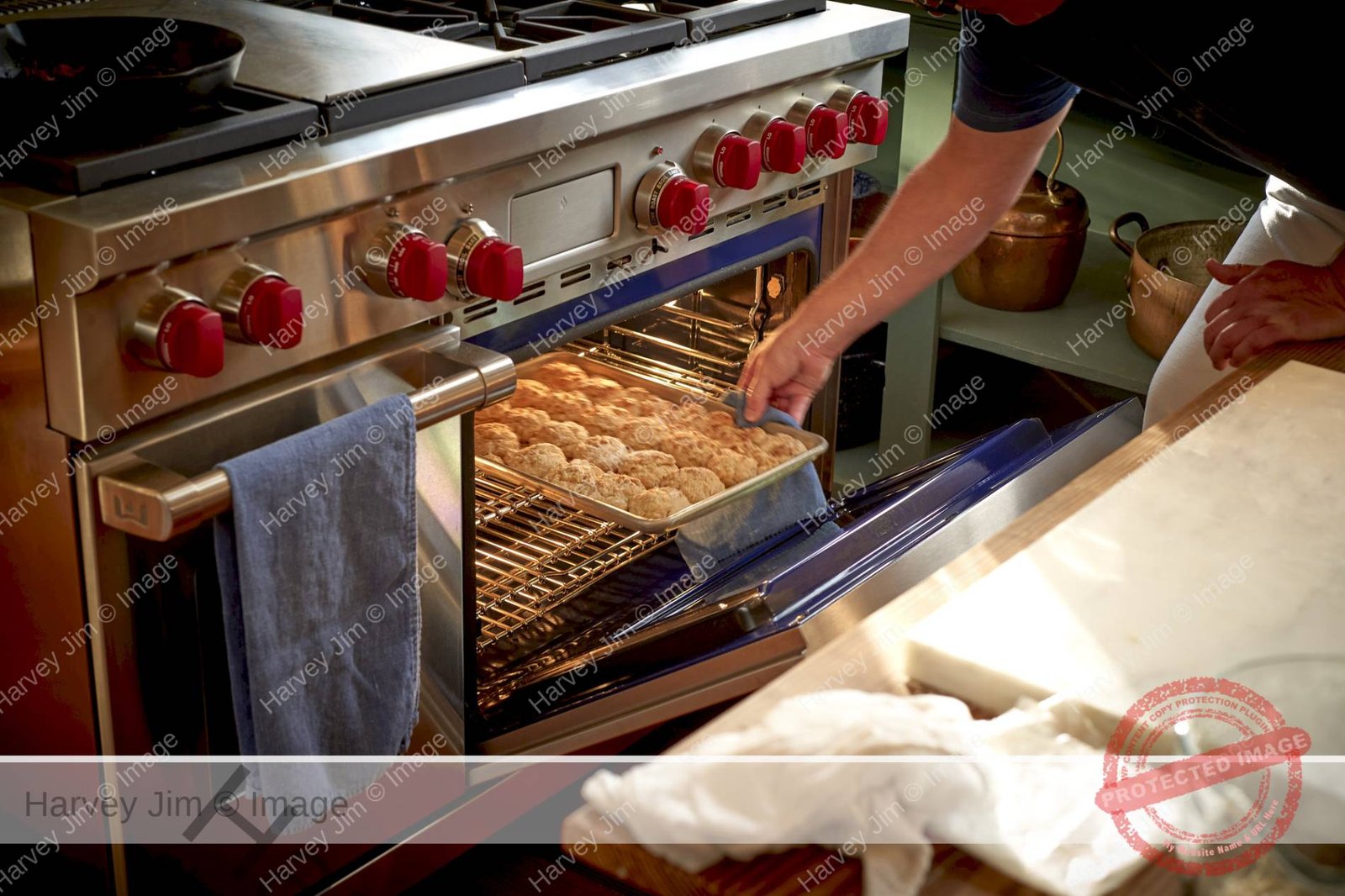
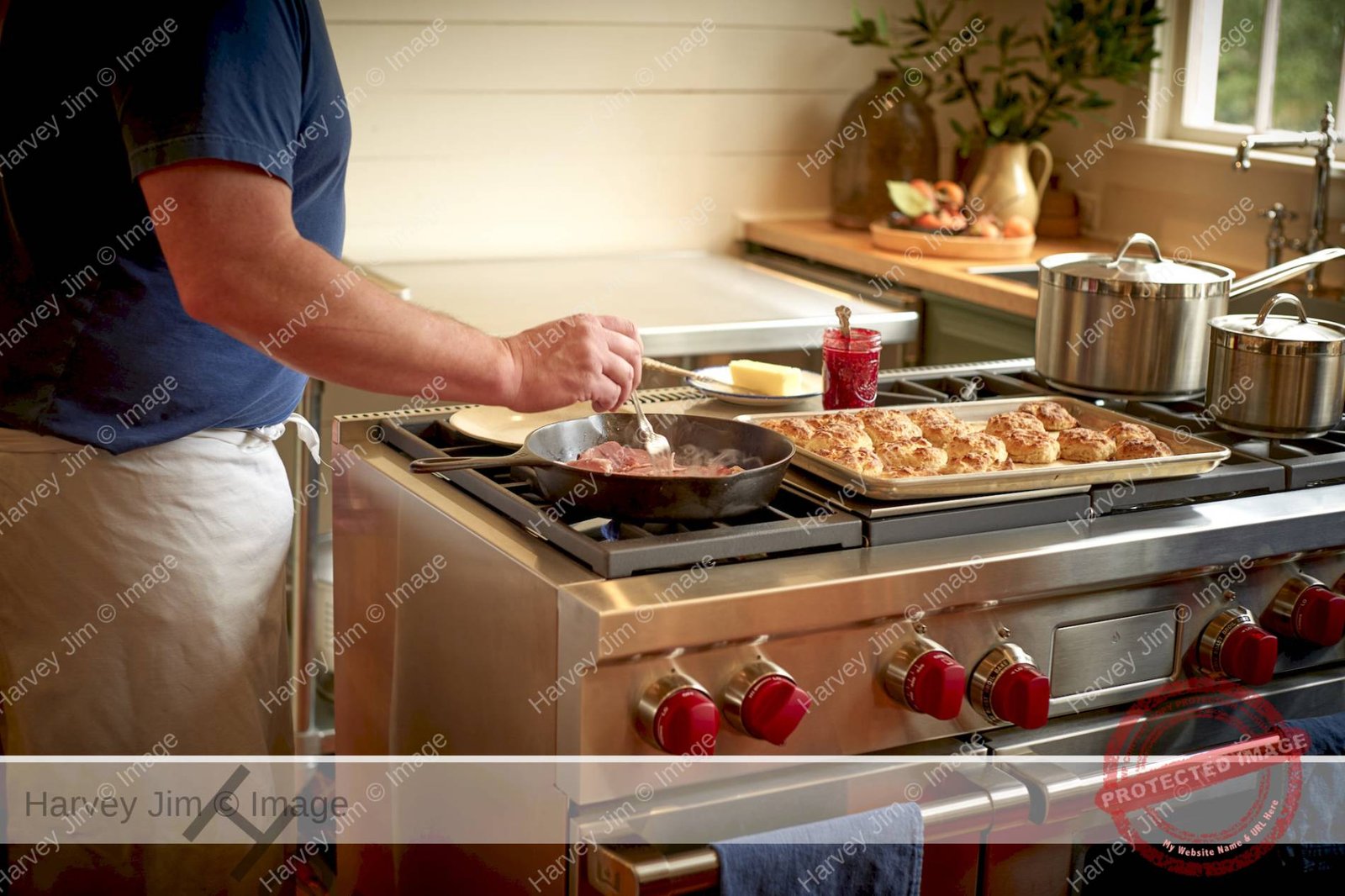
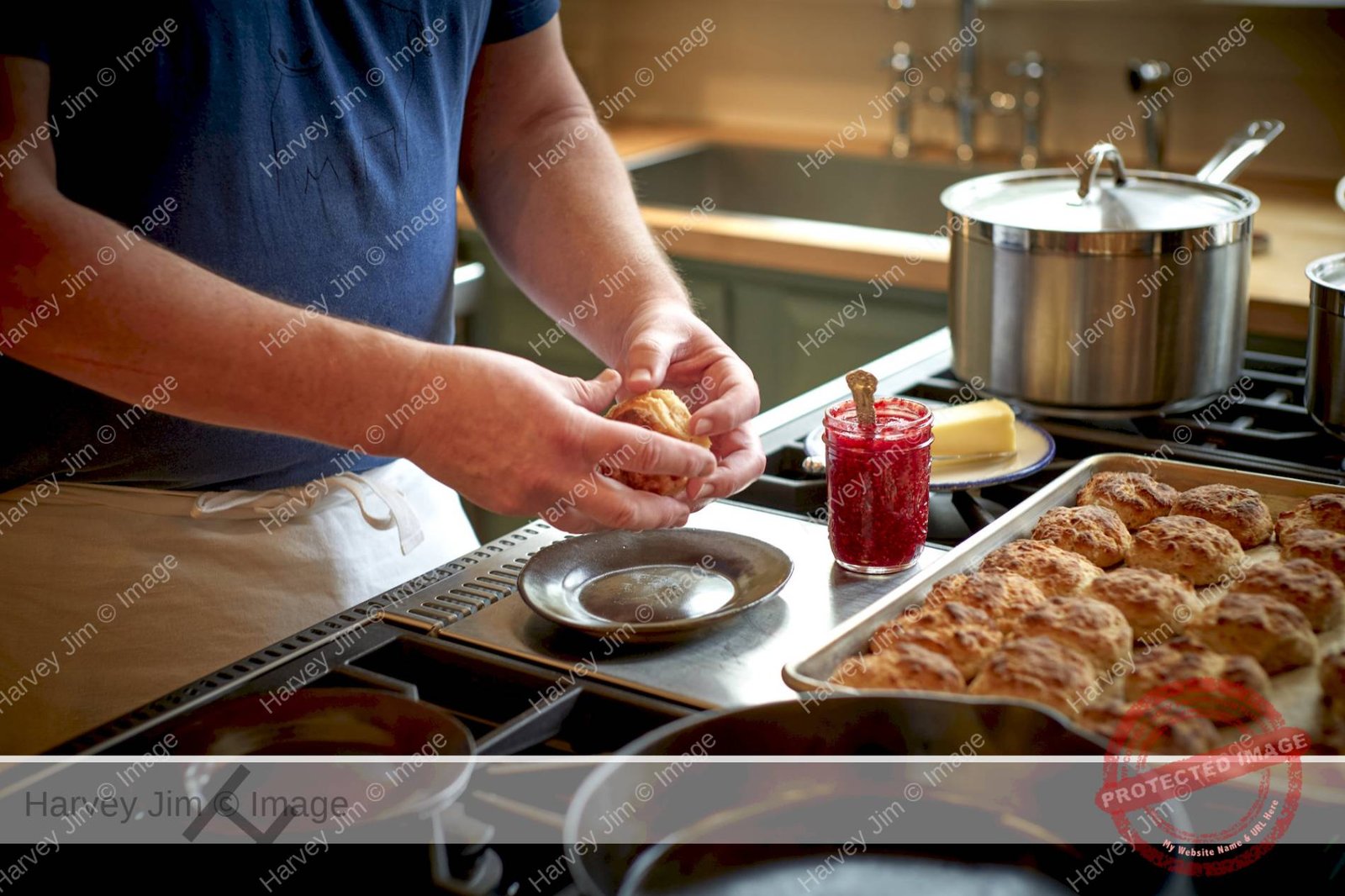
For me though, it was about more than the biscuits. I was there with my wife and daughter, with a human being whom my human being ‘ometer signaled to be a wonderful person, learning about an humble craft born of rich and poor blacks and whites in the south, for a couple hundred years. The best part is that we’ve now made multiple biscuits at home; they all vary slightly, they are all wonderful and we all reflect on those wonderful hours spent with Scott in Reverie, on our black belt, biscuit, gateway experience. It’s changed me and us forever, added a layer to our lives, and made us much better biscuit makers. That’s all we could ask for.
If you’re interested, go to this edition of Garden ‘n Gun for a much better overview than mine. The only equipment note I would add is we have two different calphalon baking pans – one of which does just fine and the other (of the same thickness) which takes on the shape of a potato chip when placed in the 501 degree oven. So, be sure to check those pans. And, finally, there’s the recipe and the details of how Scott goes about it. The whole thing meant so much more to me than just the list of steps, I focused this piece on Scott and the experience and what it meant to us, but if interested, you can find the recipe here.
So, go see Scott, make some biscuits, and get a black belt nonetheless.