
Lillehammer to Dovrefjell
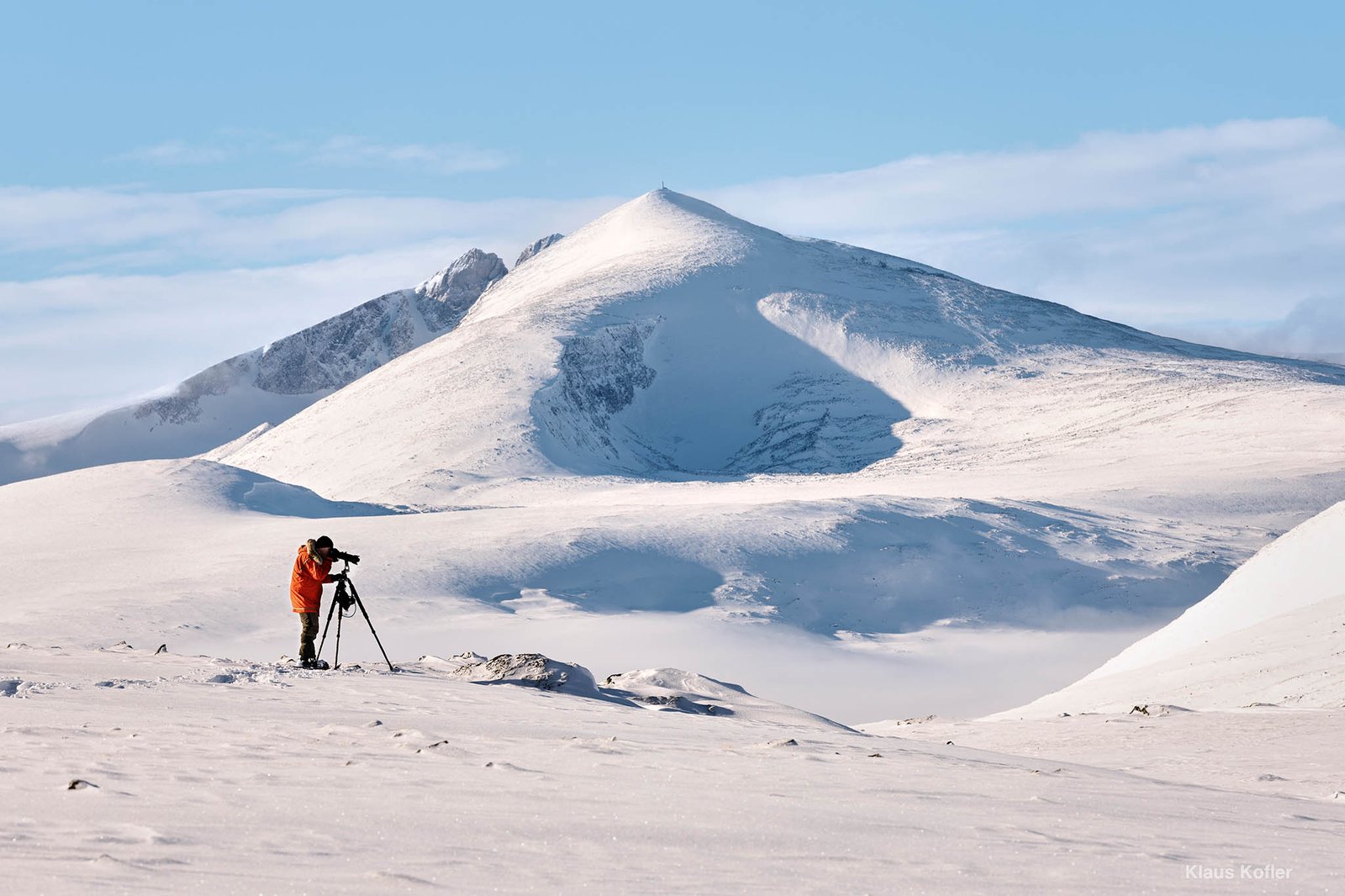
The trip from Lillehammer to Dovrefjell cuts through a landscape that is daunting — frozen lakes and rivers, dark pine forests, farmhouses buried in snow to their windows and unforgiving windy peaks. That said, Kongsvoll, our entry point into Dovrefjell National Park, sits at the edge of a different world entirely. When I stepped out of the car and into the perfectly clear air at about 6F/-14C, the reality of what I had signed up for came into sharp focus.
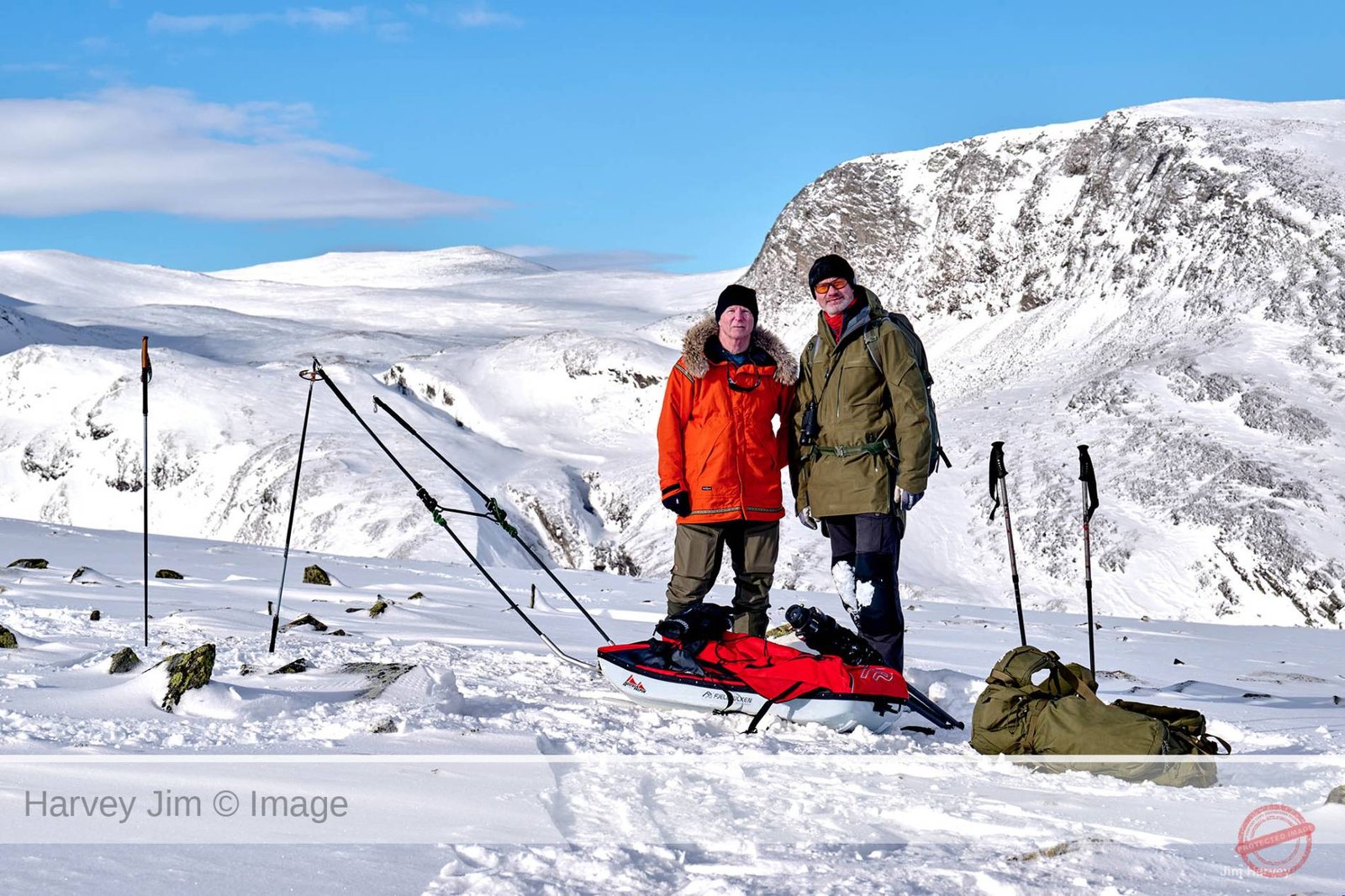
All of this made little sense for me, as I am from the southeastern US, don’t cross country ski and had almost zero experience with deep winter camping. Despite that, Klaus and I planned 7 nights and 8 days of unsupported winter camping and trekking on snowshoes to find and photograph the MuskOx. Klaus, an Austrian whom I met the year before in Sweden on a dog sledding trip, is quite experienced in winter endeavors and had been to Dovrefjell a couple times before, camping and photographing the MuskOx in the Norwegian winter (by himself).
The Right Gear
If one doesn’t have the right gear in deep winter pursuits or if that gear is not used in the right way, the consequences can be severe. I have lots of backpacking and camping experience and gear, but not much once the temp drops below 20F/-6C or so. In order to compensate for my newbie status, I had to research and acquire sufficient winter gear (e.g., tent, sleep system, backpack, down jacket and pants, gloves (and more gloves), boots, outerwear and on and on), somehow get all of that stuff to Klaus (so that he could drive it up from Austria) and then use it properly so as not to freeze my toosh off in the process. Of course, I didn’t think about how this mountain of gear would make it from the US to Austria in any remotely economical fashion, in no small part because the tariffs only became a thing after we planned this trip.
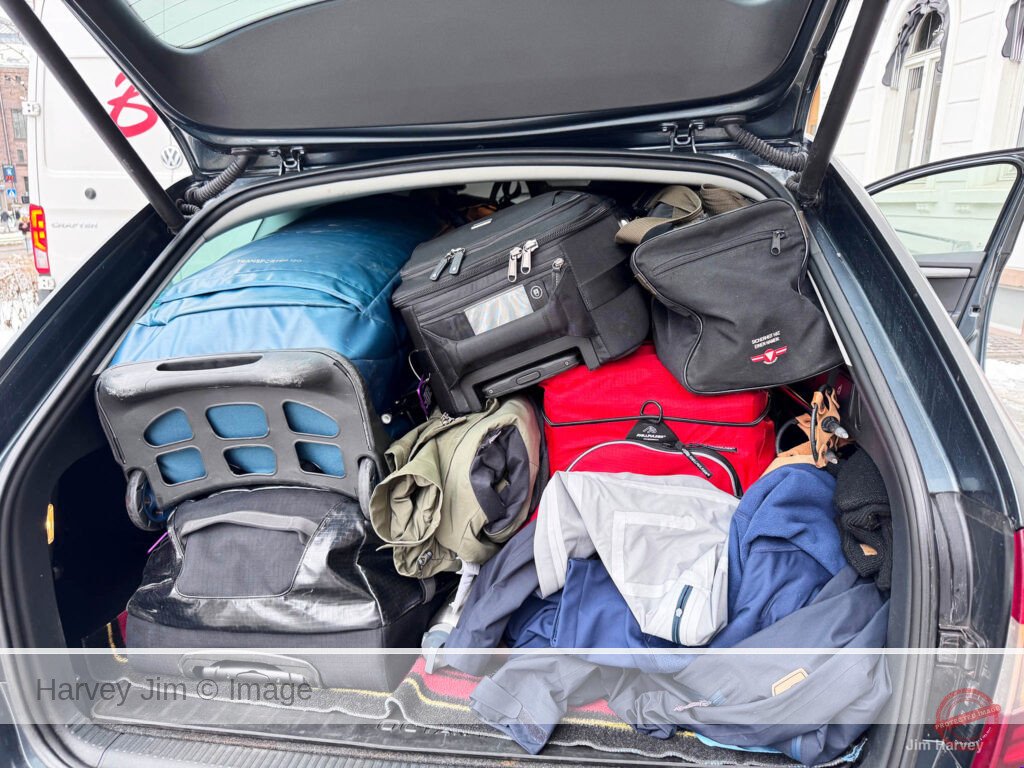
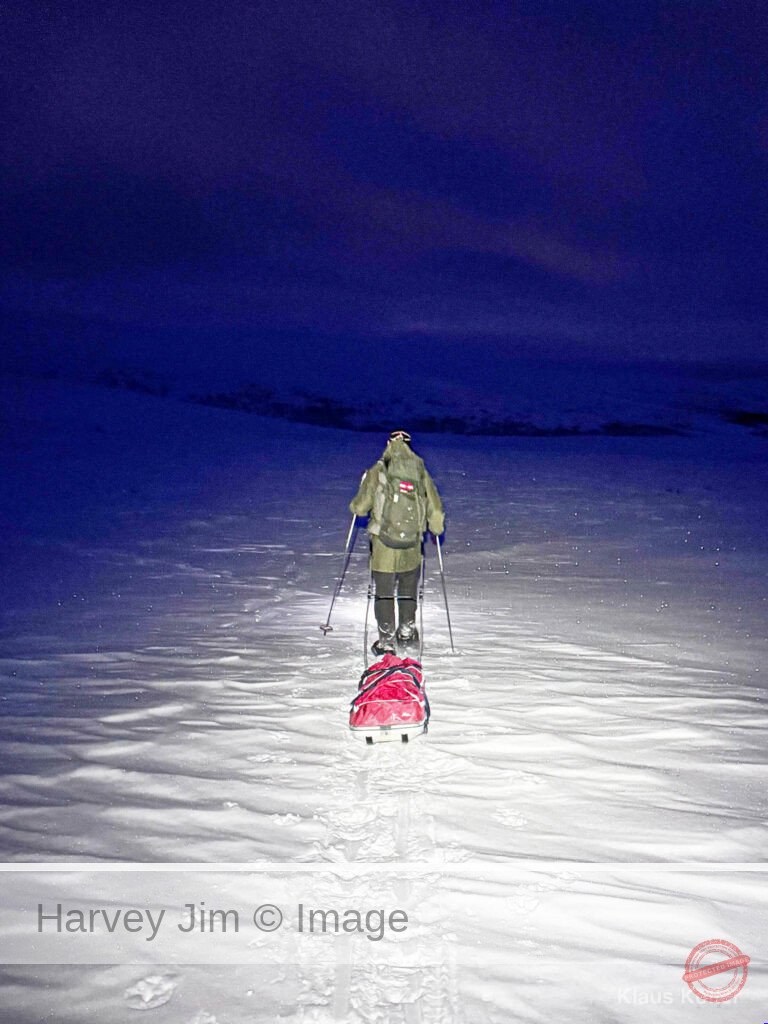
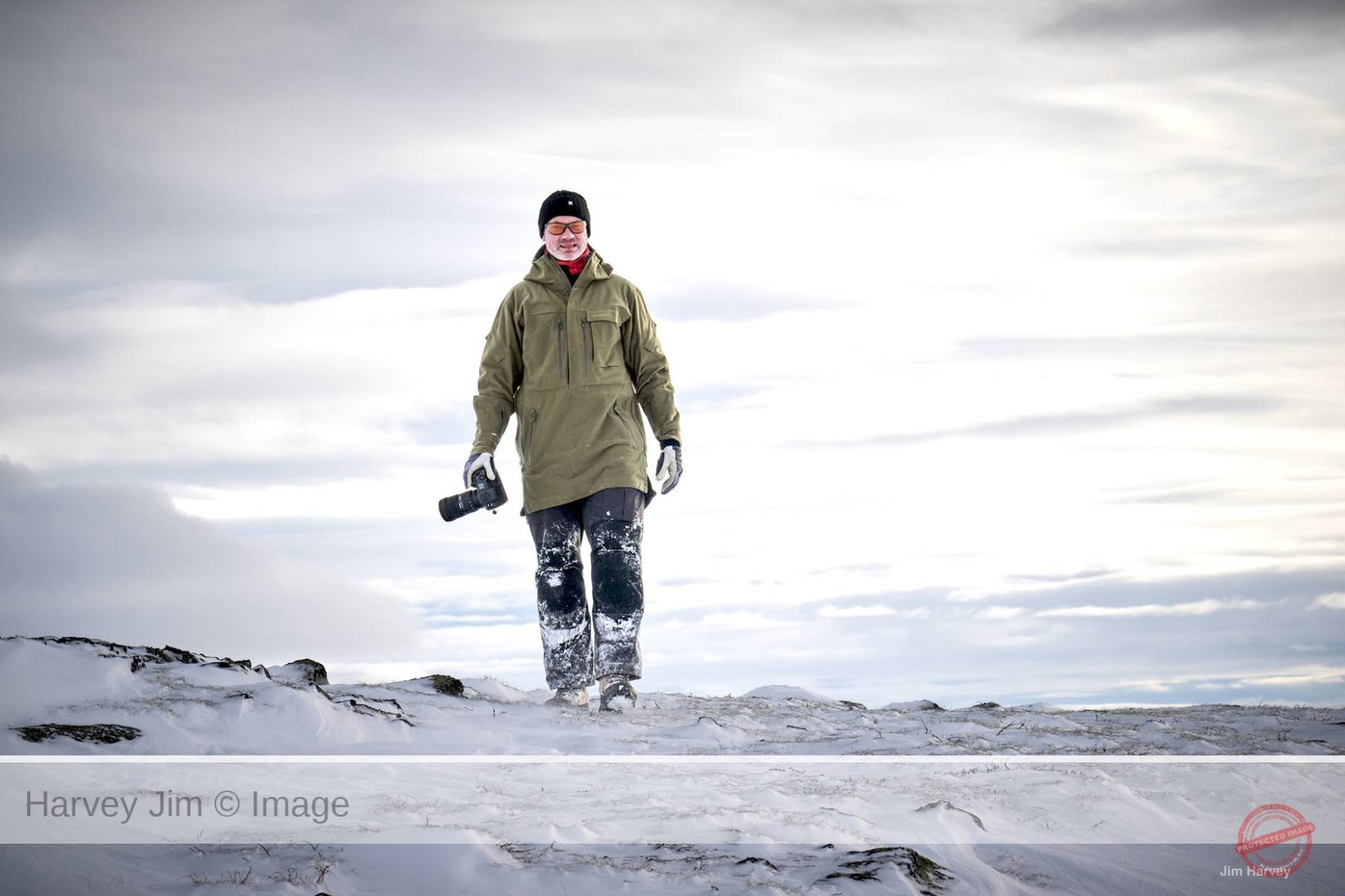
After 9 months or so of consuming (hopefully) relevant youtube videos and spending tons of money and time on gear and prep, there I stood on the side of the road (62°18’06.5″N 9°36’11.2″E) with all of the gear and food and fuel for a week. All of that had to be loaded into a pulk (sled pulled behind me, by … me) and a 100 Liter backpack (lighter stuff in the backpack). I was completely freaked out, but figured that I had come too far to back out at the very last second. I did have the benefit of a warmup dog sledding expedition in Minnesota a few weeks prior (which I will write about), but I was still a rank amateur navigating a course designed for professionals.
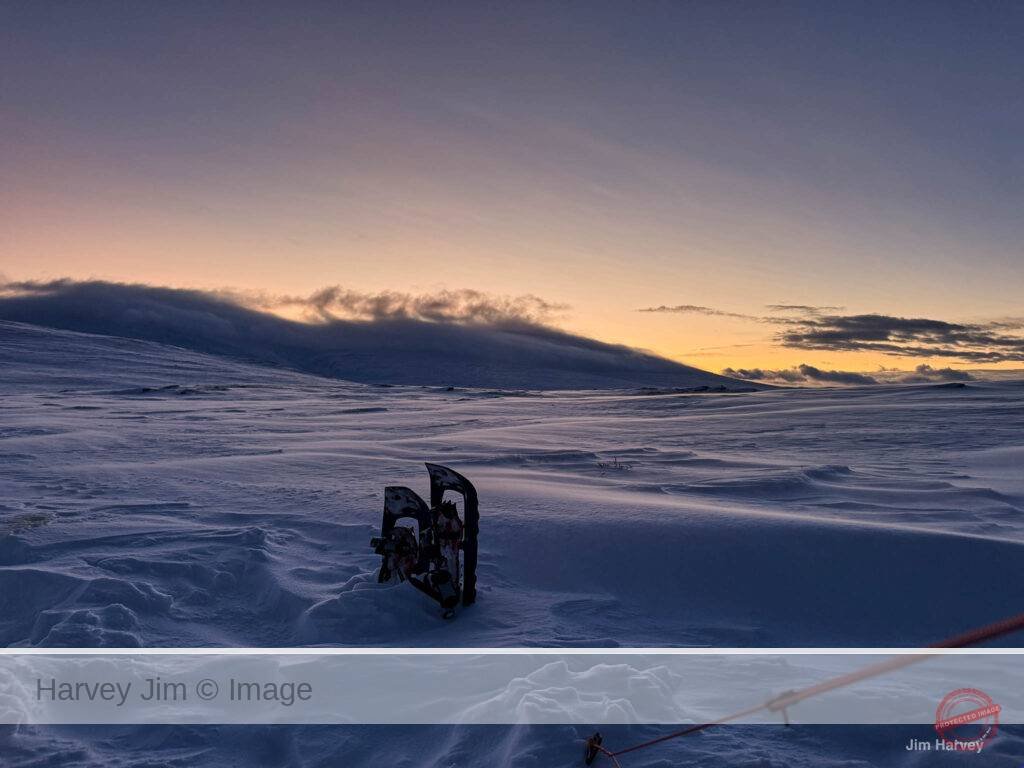
And then there were the snowshoes. Given the steep and varied terrain (not to mention the fact that I don’t cross country ski), we chose snowshoes for the trip. Not wanting to buy and ship yet another thing, I rented snowshoes and a pulk in Lillehammer, where we spent the night on the way in and out of Dovrefjell. Of course, the snowshoes I rented were the Scandinavian equivalent of rented bowling shoes and the binding on one of them broke on the first day (and remained broken throughout the trip). The harness for the pulk was similarly ill suited for the task at hand as one could not attach or detach the pulk without assistance – so Klaus, much like a dad straightening the shirt of a six year old headed into school, had to help me get that thing on and off every damn time (thanks again, Klaus, for everything).
Two Days of Trekking on Snowshoes
This was my first time on snowshoes hauling a fully loaded pulk through deep snow, uphill. One doesn’t realize how humbling that combination is until you’re an hour in, lungs and legs burning, sweating profusely (not good when it is well below freezing), and the sled catching on every buried rock and drift behind you. We slogged up all day long and failed to reach our planned destination (no doubt due to my lack of pace). I finally got in the tent around seven in the evening (well after dark). After melting snow for water and consuming the first of many freeze-dried meals, I crawled in the sleeping bags (two are required) and slept quite well.
By early afternoon the next day, it was clear we wouldn’t reach the planned destination for that day either, so we camped at the best spot we could find (trying to avoid terrain where there was no protection from the wind or where snow would accumulate (and bury the tent)). The wind was out of the south, rather than the west, which was more typical for that area, so we pitched our tents accordingly. To my extreme delight, we used that spot as our basecamp for the rest of the trip.
Encounter with a Local and a Concerning Bass Note
We continued our upward slog on Day 3 (but we only had day packs, camera gear and provisions with us (thanks Klaus for pulling the pulk). After a few hours, we curved around a huge mountain and were rewarded for our effort. The vista revealed sweeping, open scenery: a white plateau broken only by mountain silhouettes, the sky enormous and bright blue above it. While we were trying to capture photographs that would do the scene justice, the mountain spoke. A low, resonant whump emerged from the snowpack — the unmistakable compression sound of a buried weak layer settling, the acoustic signature of avalanche potential. According to Klaus, if you hear that, you’ve gone too far already and we had gone too far already. It was a sound I will never forget (but don’t want to hear again).
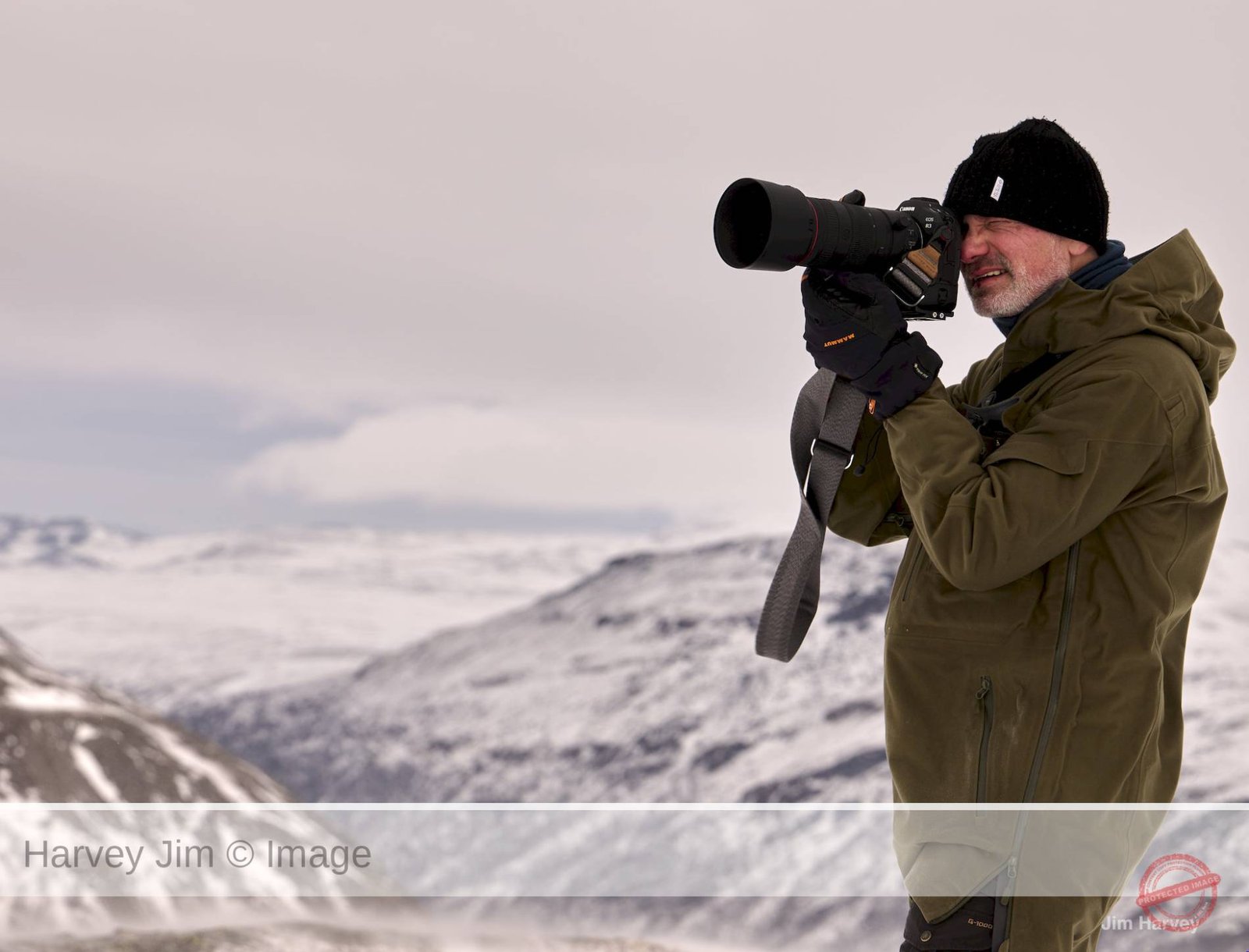
Once we were safely off that slope, a guy on snowshoes with a camera and long lense emerged from the direction of our original path. He was a local photographer named Oddvar Olafsen, a Norwegian in his late sixties, also on snowshoes. We exchanged pleasantries, took photos and then he told us where he had recently seen the MuskOx. We went back to base camp that night, stopping where Oddvar had indicated they might be. We found tracks and droppings, but still no MuskOx.

The next day, we returned to Oddvar’s spot and finally spotted four bulls further up the valley. Even though Klaus had not seen them move in his previous trips, these four were crossing from the other side of the valley over a frozen river and up the slope in front of us – they were seemingly on a mission. We double timed it (to the extent one can do so with all that gear, and deep snow, and a broken snowshoe) and were finally within long lens reach of them. We shot some photos from a distance, but these guys were well on their way. Then we saw a herd of about 20-25 across that same valley (on the other side of the frozen river) and our hope was rekindled.
We made our way across the (completely frozen) river, but by the time we got where we thought they should have been, that herd was clearly making its way up over the ridge. It was probably a two hour climb for us to get to that spot, but they were no longer where they should have been. We contemplated going over that ridge to see if we could photograph them, but another slope presented too much wind and too much avalanche risk (without the tell-tale whump we heard the previous day). Disappointed, we turned back and crossed the frozen river again to go down the valley and back to base camp. A covey of ptarmigan flushed somewhere along the way — I heard them but couldn’t see them. Fox tracks crossed our path at some point, the only other sign of wildlife that day.
Back at camp, the wind had shifted to its more typical westerly direction. So, despite the extremely long day, we proceeded to add to my windwall and repositioned Klaus’s tent so that it was pointed into the wind (although he and I differ on our theories of which end to point into the wind). I was exhausted and contemplated resting the next day.
As it turns out, Klaus had contemplated the same thing for me! He went out the next day and I stayed at camp to get some rest. I took the day to fortify the tent, organize gear, shoot some shots and dry my sleeping bag and other gear. A down sleeping bag absorbs moisture from one’s body after a few days causing the down to lose its loft (and reducing its insulating capacity), so the sunshine and crisp air (=<10F/-12C) along with a gentle wind presented a good opportunity to dry the bag. I hung it on the pulk and proceeded to do some other chores. When I came back no more than fifteen minutes later, the bag was gone!! This was my first and only “oh shit” moment of the trip. It had apparently blown down slope from us, but I could not see it anywhere. I proceeded to run downhill in a desperate attempt to avoid disaster. As if it were manna from heaven, I saw a skier (the first one I had seen all week) skiing towards me. As he got closer, it became obvious that he had my bag in his hand. We met, I shook his hand and thanked him profusely, and he handed me the coveted bag. He explained that he had found it about 300 meters from where we met and I was at least 300 meters from the tent (which is a total of about six US football fields). Just to demonstrate how obviously screwed I would have been without it, he had planned to report it to the authorities if he didn’t find the owner. Of course, I thanked him profusely again. Something shone on me that day and for it, I am eternally grateful.
The good news was that Klaus had found the four bulls close to where we left them. He was able to photograph them all day and they were not disturbed by his presence. So, I went to bed (in my warm sleeping bag) on pins and needles hoping that those bulls would not move before we reached them …
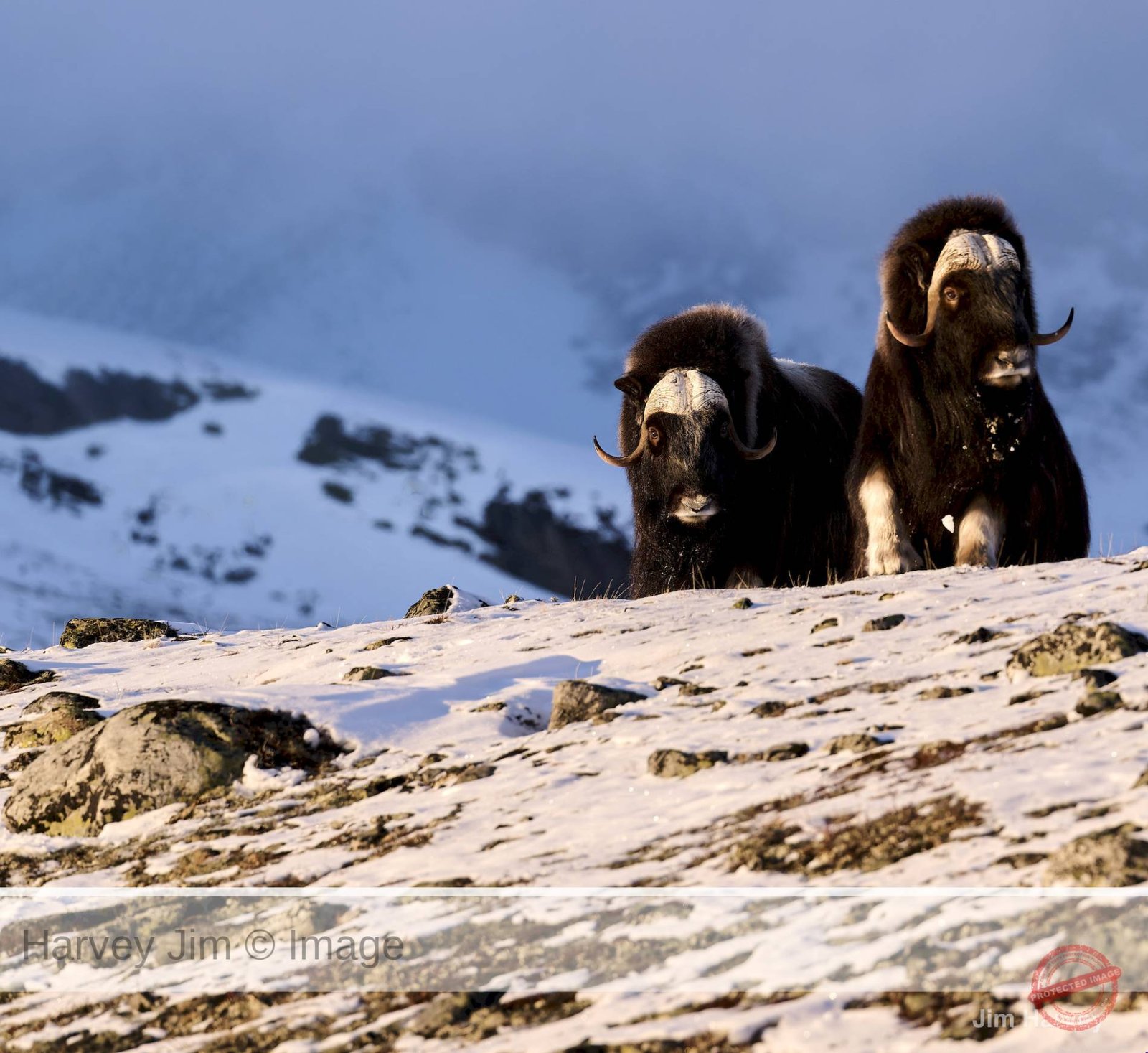
We had an easy start the next morning because we knew we couldn’t be there for the morning light, but we could relax and still make it for the nice mid to late afternoon light. We arrived around 1.30 in the afternoon, and there they were. We were careful not to disturb them, but both of us did set up tripods and take a combination of handheld and supported shots. I estimate that we spent about 5 hours photographing them. I even had time to facetime Lili while we were with them (we had good cell coverage virtually throughout the trip). It was quite special to share that moment with her, even via a cell signal.
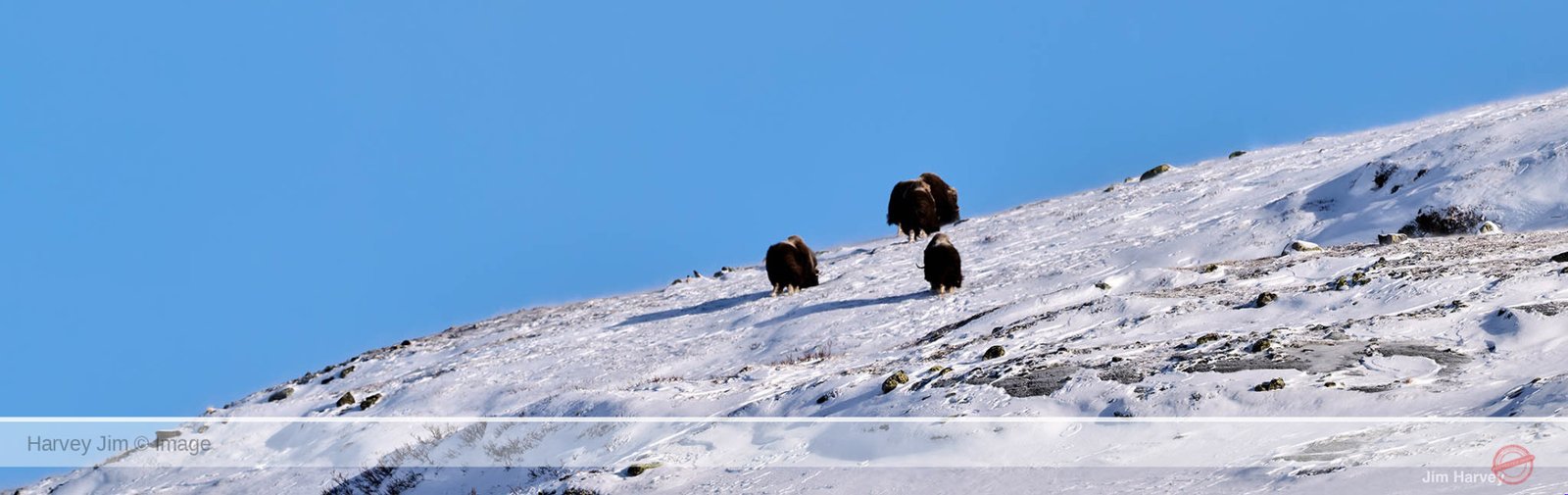
Five Hours with the MuskOx
All of this took place in that same gorgeous valley surrounded by those same gorgeous mountains and vistas – the entire circumstance was surreal.
For a few minutes, we could hear them: the hollow knock of horns clashing, a sound that carries across cold still air with surprising clarity. Telephoto lens length from four MuskOx bulls in beautiful light in the mountains in a national park in Norway in February — that’s The Mental Image that no photograph can ever fully capture.
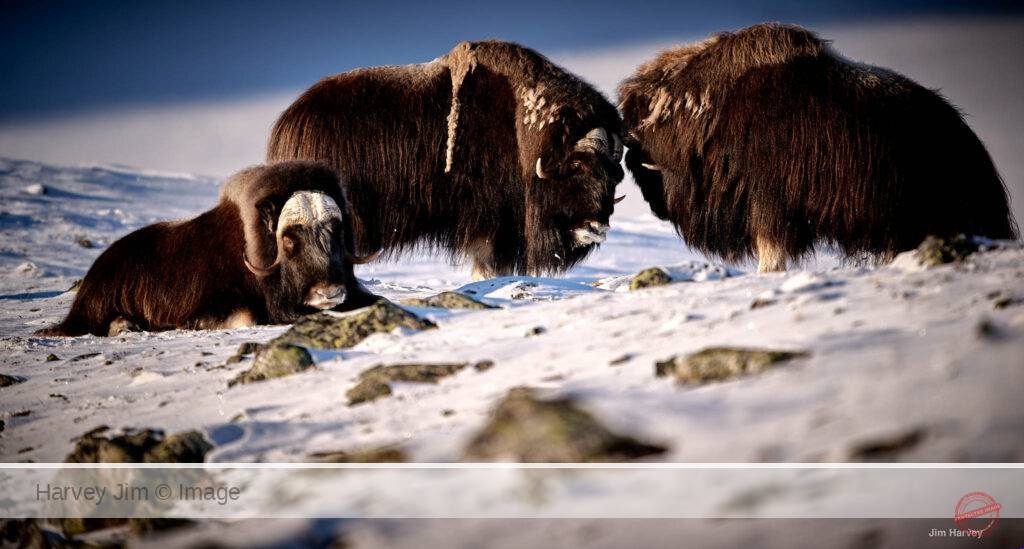
We had shot every photo we could imagine of those four on that slope, but we shot them in the gorgeous evening light. That left us with a walk back in the dark via headlamp and GPS – it was great. The next day we took it easy and looked for MuskOx along the “tourist route” (a route frequented by day hikers trying to glimpse the MuskOx the easy way). Alas, there were no MuskOx to be found that day. Afterwards, we organized our gear, spent the night and had an easy downhill trek back to the car in the morning.
It was transformative. I did something somewhat crazy (for a guy from the south) and loved absolutely every minute of it. Klaus was both a pleasure to be around and a font of knowledge and calm leadership, despite my tendency to play things very conservatively because I just … didn’t know. I am grateful for the opportunity, grateful for Lili’s many indulgences and support, and, most of all, grateful to the mountains and the cold and the wind and the snow and the Muskox.
To see additional photos from the trip, go here.
One Response
How will that turn out?!
Usually, I’m travelling alone, and that for good reason. Winter has always been my favorite season when it comes to outdoor activities and to my great passion photography. Over the years, I progressed from back-country skiing to multi-day cross-country tours with pulk, tent. My camera was – and always is – with me. Such adventures are demanding – from carefully arranged trip planning, to considering the right gear to bring, from checking weather conditions to take proper safety measures and of course it requires a certain tolerance to suffer. Winter camping, far from the comfort zone, seems scary to most people at first glance. Nights are bitterly cold, dark, and sometimes quite lonely.
So, what will it be like, for two of us? With having someone in tow – a Southerner?
Our shared passion for wildlife photography, and my love for the Norwegian fjells (Norwegian for “mountains”) and its ‘charismatic wildlife’ that calls it home, motivated me to take on this supposed adventure. And, I haven’t regretted it for a second. What a great experience!
During the planning phase, we spent countless discussing routes, gear, photography equipment, and logistics. Jim invested tremendous effort, time, and ultimately money to ensure we could reach our goal. Anyway, what was warm-up for me, was already a workout for Jim.
As departure approached, I suddenly began having concerns of a completely different nature. And once again, I found myself wondering, “How will this turn out?”
The area in Dovrefjell that MuskOx call home is large – in fact, it’s incredibly vast (1.700mi²!!). So, what if I can’t find the animals because they aren’t there where I’d expect them to be? Would seven days even be enough to find any wildlife at all – after all, we weren’t about to visit a zoo with scheduled feeding times. How much patience and endurance could I – and should I – expect from Jim? At that point, I couldn’t even imagine that my plan B – at least finding the MuskOx on the usual tourist trail – would not work out. Plan B was intended to be the backup option in case everything else goes wrong. Well, things turned out slightly different than planned.
Winters are becoming milder – unfortunately, even in Norway. Consequently, the MuskOx have retreated to higher elevations. Because of their thick winter coats, they like to seek out cold, exposed places where also the wind blows the snow off the rocks, revealing the sparse vegetation which they can graze. All the spots where I had planned to encounter MuskOx were abandoned. Not a single MuskOx in sight. It wasn’t until the fourth day that we were lucky enough to locate a herd, (thanks to the hint of the local photographer) but it was already out of reach by then. So, we made another attempt, just as Jim so beautifully describes above. Neither of us will ever forget what happened next. All our efforts were rewarded with a fantastic photo session in front of the four bulls, who generously tolerated our presence throughout the afternoon. What an awesome experience in such stunning scenery.
Jim, thank you for your company, your endurance, and your resilience. And above all, for your enthusiasm and the god spirit throughout this trip in the fjell. One can’t rank this adventure highly enough. Even the Norwegians we met expressed respect for our week-long winter camping and photography expedition in Dovrefjell. Well done, Jim!
Finally, as it all turned out so well, let’s do it again sometime…
Klaus